
Church Planting and Growth

Review of Too Many to Jail: The Story of Iran's New Christians by Mark Bradley

Standard

Genre: History/Politics/Church Growth/Christian Life

Recommended.
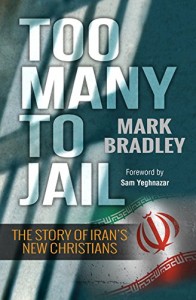
Too-Many-to-Jail-196x300This book details the rapid rise of Christianity in Iran, particularly showing the spiritual hunger and growth of the house church movement with identity-protected stories of courageous converts from Islam, persecution, and other aspects of the Iranian house church experience. There is also a great deal of history of Iran’s Islamic political and religious atmosphere, and how this environment has ironically influenced many to look toward Christianity.

This book is well researched and extremely informative, while also being easy and enjoyable to read. The author writes from a balanced perspective that is consistent with the other Middle Eastern Christian voices that I have heard over the years. He reveals how the citizens of Iran have responded to the actions of their country, and why they have the spiritual desire and courage to risk everything to leave the religion of their heritage and join the dangerous movement of house-church Christianity. How is it that the church grows the most under some of the severest persecution?

I was encouraged to read of the amazing things going on among Iran’s new Christians, and hope this book will inspire many in the western world to pursue radical faith as well.

I received a complimentary copy of this book from Kregel Publications.
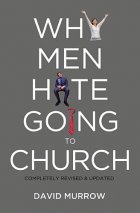
Review of Why Men Hate Going to Church (Revised and Updated) by David Murrow

Standard

Genre: Gender Studies/Church Growth

Loosely Recommended.

This is a love it or hate it kind of book and I experienced a bit of both.

Murrow makes many sweeping generalizations of gender differences and occasionally even of denominational differences, many of which I found offensive. He comments frequently that women are smarter than men, more studious, musical, and religious, while church-going men are wimpy, effeminate and unmanly. I see where he’s going with this—that some personalities are fit for “church culture” while others are not—but his gender stereotypes are grossly exaggerated.

I also had a problem with his goal-oriented interpretation of history. Throughout his writing, he briefly explains moments in church history, each time giving story-telling precedence over facts. He has interesting theories, but they aren’t grounded in evidence. In fact, most of his writing is based on observation rather than good research.

If we followed his advice, every congregation would be a mega-church (in style and growth). But is this what we want? It’s not what I want.

But despite all this, he does make some interesting arguments, bringing many insights to the table that would otherwise be overlooked. He mentions, for instance, that a sense of mission and adventure have been missing from the way churches present and carry out the gospel message. I agree. I don’t think this is a gender issue so much as a whole church issue. He also demonstrates that the church operates in a very slim selection of spiritual and practical giftings while many “more manly” giftings are left out. Again, I don’t see this as exclusively a gender problem, but I’d agree that the traditional church set-up does not cater to every learning style or personality. I also liked his criticism of the “romancing” of the gospel. While the Bride of Christ is one of my favorite analogies, it’s taken too literally in many circles, and this kind of Jesus-is-my-husband thinking isn’t healthy for men or women.

This would be a great book for small group discussion. It brings up so many questions and is an excellent starting point for many heated (and productive) discussions—largely due to the the author’s strong and controversial opinions.

I received a complimentary copy of this book as a part of the Thomas Nelson Book Review Blogging Program through booksneeze.com.

Review of Small is Big!: Unleashing the Big Impact of Intentionally Small Churches by Tony and Felicity Dale, and George Barna

Standard

Genre: Church Planting and Growth/House Churches

Recommended.

Originally published as The Rabbit and the Elephant, this book is now updated and expanded. What makes Small is Big special are the personal stories of various simple (house) churches: how they were started, how they worked, how they expanded, and so forth. It’s also about evangelism and outreach, since most of the churches are started among non-Christians outside of church culture.

It is more balanced than many other house church books in that it speaks positively regarding both “simple” (organic) and “legacy” (traditional) churches. The benefit of this is that the pastor/leader of a traditional church could easily glean from the information given without necessarily reforming all of church structure. It’s also informative regarding the predominate move toward house and non-conventional churches, even in the Western world. Examples are taken from diverse movements within the church body, ranging from Iris Ministries in Mozambique (very organic and charismatic) to Saddleback Church (a program-lead mega church). It is a unifying resource.

On the other hand, it’s not as specific or detailed regarding the “theology” of house churches so to speak. For the reader who has specific questions regarding communion, giving, five-fold ministry, and so on, I recommend: The House Church Book by Wolfgang Simson, and Corinthian Elders by Jack Fortenberry. Small is Big is an encouraging and simple book about simple church, not a complete work on the ins and outs of the house church movement.

I received a complimentary copy of this book as a part of the Tyndale Blog Network.

Review of Corinthian Elders by Jack Fortenberry

Standard

Recommended: A call to reinstate the biblical structure by putting Jesus as the head of His church.

Corinthian Elders focuses on the role of elders in the church, especially in the context of Paul’s letters to the Corinthians.  There’s a lot in this book because as we talk about changing the church structurally, many more issues arise, including the topics of money, leadership and authority, and accountability. Fortenberry does not neglect to mention these important questions, all the while calling the body of Christ to focus on the larger picture: focusing less on individual leaders and instead being taught by the Lord Himself that we may experience a more dynamic church as each member of the body becomes active.

It’s is a short book, but not one to read quickly.  I took my time with it so that I could place each scripture reference in context of entire books.  And though I didn’t agree with every detail and found some arguments weak, I gained a lot from this book.  I was also pleased that some of what the Holy Spirit has revealed to my husband and I personally, was also revealed and expressed by the author.  It is challenging, thought-provoking, and most importantly, stirred in me a hunger to read my Bible and seek out wisdom—any book that can do that is worth the read!

I received a complimentary copy of this book from the author, Jack Fortenberry.