
Eschatology (End Times)

Jesus' Resurrection and Our Coming Resurrected Bodies

Standard

Happy Passover/Pesach/Pascha/Easter Season! May you all have blessed holiday celebrations within your traditions!

In my theology class right now, we are talking about the resurrection of believers upon Jesus’ return. He is the “fruit fruits” of the harvest, and we likewise will be resurrected through Him—first those who are “sleeping” (a reminder that we do not experience death even in death itself), then those who are alive when He returns (1 Thess. 4:16-17, 1 Cor. 15:20, 23, Isaiah 26:16-21).

Why are believers going to be given new bodies? “Now may the God of peace Himself sanctify you entirely; and may your spirit and soul and body be preserved complete, without blame at the coming of our Lord Jesus Christ” (1 Thess. 5:23).

It is not just our spirit and soul that is made perfect and reconciled to God, but also our body. There is a partial sanctification of our bodies even now, as the Lord graces us as our healer. But the physical body, like the physical world, cycles into decay and destruction—things get old, and they begin not to work as well. In the Kingdom, the cycle is opposite: everything moves from glory to glory. The resurrection of our physical bodies is a fullness/consummation of that new cycle into our glorification with Christ.

Those who are made imperishable can no longer exist alongside the perishable (within a perishable body); thus, we need new bodies. It is like the parable of the wine and the wineskins or of mixing the old and new garment. The spiritual and the physical will be mended together upon Jesus’ coming; but in order for that to happen, everything that does not reflect the Kingdom must be done away with (like our old bodies), and made new.

“So also is the resurrection of the dead. It is sown a perishable body, it is raised an imperishable body; it is sown in dishonor, it is raised in glory; it is sown in weakness, it is raised in power; it is sown a natural body, it is raised a spiritual body. If there is a natural body, there is also a spiritual body” (1 Cor. 15:42-44).

How will they differ from our current bodies?

I have already mentioned that while our current bodies are prone to aging, illness, and decay, our new bodies will instead follow the Kingdom principle of glory to glory: “But we all, with open face beholding as in a glass the glory of the Lord, are changed into the same image from glory to glory, even as by the Spirit of the Lord” (2 Cor. 3:18). This begins in part now, but in fullness only upon the day of the Lord. Notice Philippians 3:21 says Jesus will “transform our lowly body that it may be conformed to His glorious body.” He is not going to “replace” our body so much as completely transform it. We will still be ourselves, but in the vision God had of us at the Creation of the world. We will be imperishable, glorified, powerful, healthy, and perfect in Him!

We can also glean insights about our resurrected bodies from observing Jesus’ resurrected form. Jesus’ resurrected body was a combination of the physical and the spiritual in perfect unity. He was not a spirit, but came in corporeal form. People could see Him, and touch Him (Mat. 28:9, Luke 24:39, John 20:27-28). He was able to eat food (John 21:12-15). But He was also able to transport from one place to another and/or walk through walls—in other words, He had no physical hindrances (Luke 24:31, John 20:19). We can likewise expect to experience the completeness of the physical and spiritual realms at-one-with-each-other (atoned) in our resurrected state.

I most look forward to the deepness of intimacy with God and each other that is so beyond what we know and crave in this world that the marriage relationship will not be necessary (Mat. 22:23-30). I also imagine exciting new possibilities like flying/levitation, and other adventures beyond our wildest thoughts and dreams.

It will be glorious. Praise the Lord for dying for us, so that we can follow Him into death and resurrected life!
The Second Coming, Childbirth, and the Mistake of Putting Life on Hold

Standard

I am very pregnant and, though not overdue, quite ready for our newest family addition to arrive. To be most honest, I’m past ready, and have been struggling with impatience. My first son came so suddenly that I’ve had an expectation that this one might come early too (he’s already later than his brother), and I’ve been maybe a bit too zealous in watching for signs of impending labor and hindering life-as-normal just in case the baby may arrive any moment.

Even with my first baby I did have signs of labor: my water broke, contractions started and got more intense, and there were a couple other things for the TMI category. My labor was just over two hours and very sudden, but it was still labor. I keep hearing crazy stories, though, about babies coming suddenly in the bathtub or the toilet, or obese women who don’t know they’re pregnant until the baby comes suddenly in their pants—it’s distractions like this that have made me consider the possibility that baby two could come without warning as I’m driving or shopping or in any other very embarrassing and inconvenient way. And when I’m so intense in thinking that labor could begin any minute, it hinders my daily life; after all, I wouldn’t want to go somewhere I wouldn’t feel comfortable delivering. :-P

The Christians in Thessalonica made a similar mistake. They had been doing a great job persevering in their faith despite various hardships (Paul gives them many positive affirmations in 1 Thessalonians and 2 Thessalonians), but then Paul gives them a couple telling warnings:

  1. don’t assume Jesus is coming any minute because He will not come until the apostasy and the antichrist come first (2 Thess 2:1-12)
  2. keep working so you can afford to eat; it’s not good to be a burden to other people (2 Thess 3:6-13)
It seems that these Christians in their zeal had misunderstood the spiritual season of their time and put life on hold—quitting their jobs and living off of others—because of their certainty that the Lord would come at any time. Their behavior is almost enduring and goes hand in hand with a long list of praise and encouragement from Paul regarding their faithfulness toward God, and yet they were deceived by their assumptions and made a couple bad choices.

It’s been my mission the past couple days to relax and think less about my upcoming labor. I want to be alert—and I’m so excited for this moment that it is impossible for me not to be—and yet I do not want to be paranoid over every possible symptom or so expectant that I put my normal life on hold. It is an interesting balance to anticipate an event with zeal without going overboard. Paul admonished the Thessalonians to keep living and doing the good things they know to do (2 Thess 2:15, 1 Thess 5:11-28), and I’ve been praying that I’ll be able to relax and enjoy these last pre-baby days as well.

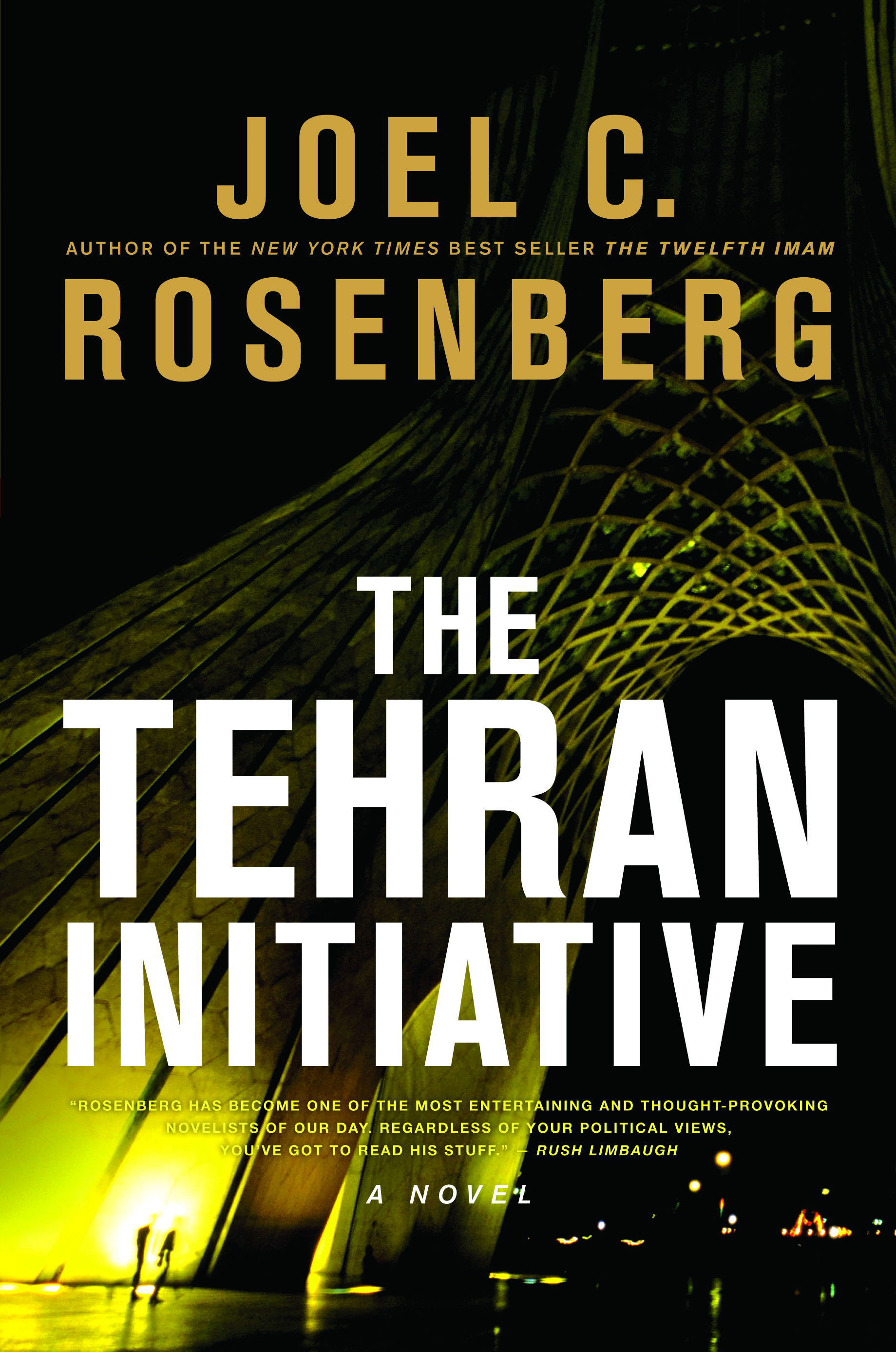
Review of The Tehran Initiative by Joel C. Rosenberg

Standard

Genre: Apocalyptic Fiction/Action & Adventure

Series: Book Two of the Twelfth Imam Series

Recommended.

I love eschatology and the Middle East, so this fictitious rendition of end time events was especially fun for me to read. The Tehran Initiative is the second in a series of three (I recommend reading them in order as The Twelfth Imam really sets up the story and characters).

The story begins as the Twelfth Imam (the Islamic Messiah) is coming into power and setting up his caliphate, and each nation must decide how to respond. Meanwhile, CIA agent David Shirazi, is working undercover in Iran to find Iran’s nuclear warheads so they can be destroyed before the next Holocaust begins.

The Tehran Initiative has more Christianity, more romance, and an even stronger emphasis on world politics than the first book. It keeps the momentum from The Twelfth Imam, but feels slower because it focuses on character development and introspection more than physical action and suspense (but don’t worry: it is still plenty suspenseful!). Although I enjoyed reading it just as much or more than the first book, it may not be as enticing to non-Christians or those expecting intense action plots. There is also a lot of supernatural action and emphasis, which I personally love (and experience) but which may also be a turn off for some readers.

For those who enjoy thinking about the end times, the political conflicts in the Middle East, or how Christian and Muslim eschatology fit together, I’d highly recommend this series. I love how Rosenberg realistically develops and captures one possible end time scenario, while staying true to scripture, and giving his audience so much (politically, spiritually, introspectively) to consider. I was personally encouraged and strengthened in my faith to go on this adventure with the characters. I look forward to the final book in the series: The Damascus Countdown, to be released in fall of 2012.

For more on this book and the author, check out Joel Rosenberg’s blog and the Joshua Fund, which was founded by him and his wife to “mobilize Christians and bless Israel and her neighbors in the name of Jesus”. I’d also encourage you to watch this short video of the author introducing the book:

I received a complimentary copy of this book through the Tyndale Blog Network.

Understanding Biblical Prophecy

Standard

I was interested in prophecy even before I encountered the Lord: first, because it was thrilling and a bit frightening, and now because I love the Lord so much I want to know everything about what He’s doing. Here are a few of the things I’ve learned that can make the study of Biblical prophecy more enriching and productive:

  1. The heart of all prophecy is the revelation of Jesus the Messiah. While it can be easy to get caught up in solving the riddles and filling out the charts, if we miss what Jesus is saying about Himself, then we’re missing the point. It doesn’t matter how much head knowledge we gain if the relational part is missing.

  2. Jesus shares His deep secrets with His friends. Being a “Christian” doesn’t qualify us as being His friend—spending time getting to know Him does.  Understanding prophecy is very easy—it’s a lot of patience and a lot of listening, starting on a foundation of friendship. Jesus will reveal layer after layer of deep wisdom in His timing and as per His priority.

  3. The Bible has a lot to say. When God speaks we should listen, yet when it comes to reading the Bible, many assume that it can’t mean what it says.  The truth is, the Bible is straight-forward most of the time. When we don’t understand, we should pray into it, rather than assume it must be saying something else.

  4. It doesn’t take brilliance to hear from the Lord, but some study is required. I’ve met intellectual Christians who over-complicate simple spiritual truths and spend more time on the word level of the Bible than the main picture and miss the point; and I’ve met emotionally oriented Christians who trust in verses out of context and can’t rationally defend their faiths. Either extreme is not good, but we can trust that God has called all people, regardless of personality and ‘smarts’, to follow Him. Our relationship with Him takes diligence in both learning and listening.

  5. Prophecy can’t be learned through books and commentaries! I’m not saying not to read commentaries, but to read them with care. Even if the author is brilliant and right on, spiritual wisdom must be passed through spiritual methods—it doesn’t help to have rote understanding of what may be if we can’t hear it from the Lord ourselves.  We must all cultivate our own relationships with the Lord.

  6. End time prophecy is sealed until the appointed time. I strongly believe that the appointed time is quickly nearing and that we have increasingly more understanding of what the Spirit has been saying to the church since the beginning; but let’s not get ahead of ourselves. We learn, and ask, and listen for understanding and are given it one new piece at a time. We need to be careful not to fill in the missing pieces with our own knowledge. It’s okay to admit that we don’t understand everything right now.

  7. Prophecy is more than just the “prophetic” passages. To get God’s full message, we study everything He says and everything He does. We study the history of His people the Jews, the history of the church, and we even examine our own lives for clues to what He’s been doing in the past and present that reveal His heart for the future. It’s not just about Revelation and Daniel and so forth; when we know His heart, we know His battle plan.

Before the Storm Comes

Standard

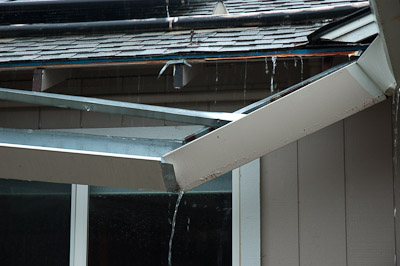
Storm DamageThis past weekend we had our first real storm of the season, and we weren’t prepared for it.  Our rain gutter, as the picture shows, did not quite make it through the first of the wind and rain.  It looked like it was also going to pop right on through that bedroom window, and so we were out in the rain trying to remedy it.

The lesson is that some things need to be dealt with before the storms come, or it becomes too late.

Noah was able to rescue his family from the wrath of God because he began building the ark right away.  Rahab put the red cloth outside her window immediately, even though she would have seen the attack from her window as the Israelites approached for battle. Esther called an urgent fast that the upcoming destruction of her people would be turned around by the Lord—and of course it was.

Likewise, there are things we were created to do.  And there are storms that are prophesied to come.  As a follower of Christ I know that I am not called to live in the world, but to live in the kingdom of God within the world.  And there are certain good works which Christ prepared beforehand for me to do—and for you too, whether you know about it yet or not (Eph 2:10).  We can’t function in our purpose for God until we submit to God, love God, and hear God.  Our greatest asset is time, and yet there is not enough time to waste.  Storms are coming, so we should prioritize so that they don’t catch us by surprise.

Review of The Twelfth Imam by Joel C. Rosenberg

Standard

Genre: Apocalyptic Fiction

Series: Book One of the Twelfth Imam Series

Recommended: A riveting story of high stakes and affronted faiths.

I thoroughly enjoyed reading The Twelfth Imam, the story of an Iranian born CIA agent working to find and disrupt the secret Iranian nuclear weapons program in the midst of catastrophic global events, personal tragedies, and the questioning of his personal faith as a non-practicing Shia Muslim.

Although it is very much a work of fiction, the style of the writing and the sincerity of the characters make the story appear as a glimpse into an apocalyptic reality.  I especially appreciated the depth of the character’s faiths (it’s not often that a Christian writer would show those of other faiths to have so genuine a passion for their beliefs) and the appearance of the supernatural realm alongside the physical.

Being a Christian work, I found it interesting that the book does not have any “Christian” characters—that is, some characters come to know Jesus Christ as Lord, and faith is at the forefront, but there were no evangelical Christians going around making converts, and I found this somehow refreshing (and more believable).

From a theological perspective, I found this scenario much less dramatic than the prophetic illustration of the last days—not that the stakes weren’t high, or that the plot wasn’t exhilarating, but that it only portrayed a small piece of the prophetic story and even then, only as one possible outcome (of course, there’s nothing wrong with that, so long as readers read fiction as fiction and the Bible as the authority on biblical mysteries).

My only complaint is that the ending was surprisingly abrupt—I considered that perhaps part of it was missing before discovering that this book is the first in Rosenberg’s newest series.  Even so, the book ending felt incomplete (not mysteriously, romantically or suspensefully incomplete, but like the story was chopped off mid-sentence); and since it was so enjoyable to read, this was especially disappointing.

I received a complimentary Advance Reader Copy of this book as a part of the Tyndale Blog Network.