Language Arts Curriculum
Advanced Elementary/Middle School
Recommended!
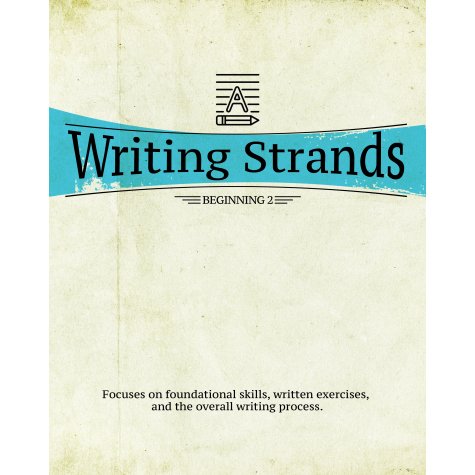 I purchased some of the older Writing Strands editions a couple years ago, and largely did not care for them; so my review of this material began from a place of skepticism and curiosity.
I am very impressed with multiple components of this resource, and am planning to use it with at least one of my kids, when he is ready.
(I’m also considering using it for myself. My undergraduate and some graduate work was in English/Linguistics, and I have always wanted to engage more on the fiction and literature side. There are some excellent takeaways from the exercises in this curriculum that I believe could aid me in creative writing.)
The essence of this curriculum:
The focus of this curriculum is on strengthening communication (including one’s attentiveness to the present environment, before articulation can occur), developing unique expression, having confidence in authorship, and guiding students to recognize and refine their own observations, stories, and writing.
The structure alternates between one week of writing, then one week of reading. Students will keep a writing folder, binder, or notebook of their work, and both student and teacher will track the student’s progress with the weekly Progress Report, and Writing Skills Mastery sheets.
On the writing side, the student begins with very simple exercises for the purpose of learning to follow directions. Then the material quickly shifts into the “real” stuff: learning to write complex sentences, completing prewriting exercises to organize one’s thoughts, and recognizing the many aspects of strong storytelling (descriptions, mood, settings, dialog, symbolism, characters, plot development, narrative voice, and so forth). Grammar is highlighted for the means of communicating, but not in and of itself.
On the reading side, students will study Scripture (prepared with questions in the curriculum), while learning to ask important contextual and literary questions, and then being able to make comparisons and find personal applications within the Word. Students will also engage with contemporary (or other non-biblical) literature in a similar matter of asking good questions about what they have read. This material is chosen by the parent/teacher (or perhaps student), and can be broken down however is preferable—a full book per week, an assigned number of chapters, an engaging article or two, etc.
Often the writing and reading lessons complement each other nicely by working on similar themes from different perspectives.
What I love about this curriculum:
- It is not overwhelming: it is both easy to follow the directions and get each assignment done, and is also set at a reasonable (and consistent) pace. This does not mean there is no planning required, as the parent-teacher is responsible for creating the book list, and ideally has read the books in order to facilitate the best discussion with the student. The student must also find time to read the material in advance of the classroom time (which is a healthy habit toward personal responsibility and academic achievement).
2. The structure is gentle, while progressively becoming more challenging.
3. I love the freedom and adaptability of
choosing one’s one book list, and the combination of analyzing Bible passages.
4. This format provides excellent questions to develop the logical process of reading comprehension, and general attentiveness to our world, our own feelings, and consideration of others. The skills of observation and communication are very important, and not limited to academic reading and writing.
5. Students are clearly guided through the aspects of story development by doing—not just teaching. This is a practical, and hands on curriculum, that will stir the imagination.
6. I quite enjoyed the author's candid and humorous tone throughout.
What this curriculum is not:
This is not a grammar-centered curriculum. Students are expected to understand the basic elements of grammar, and will strengthen these in practical usage. That is, they will be challenged to add words to strengthen their sentences, rewrite and restructure sentences, and consider whether a sentence aids the goals of the paragraph or story. However, students will not be asked how a particular word is functioning within the parts of speech; nor will there be any diagraming of sentences, or abstract discussions of language itself.
This is also not a curriculum for strengthening persuasive or expository writing styles, nor for research methodology and practice. While it does go beyond storytelling and creative writing, there is a creative feeling to the activities, with narration as the strong emphasis. No five-paragraph literary essays here! ;-)
Grade Range:
Before beginning this curriculum, students should be able to write a 4-5 sentence paragraph, with a fundamental understanding of syntax and grammar, and be proficient in basic reading comprehension and analysis.
The inside cover suggests a wide grade range from 3rd grade through 7th grade, mentioning 4th grade as an ideal target. The official Writing Strands Placement Guide has this at 6th grade, in order to fit with the corresponding curricula. The flexibility comes from: 1) the individual level/ability of the student, and 2) the adaptability of choosing one’s own reading list. A 3rd or 4th grader could potentially feel just as at home in this curriculum as a 6th or 7th grader, by using age/level appropriate reading material, so long as the other standards are met. Moreover, each student is learning to refine his/her own writing, which is always improving. This resource does well in meeting students at their own level.
Due to the nature of the material, the student may need a bit of enthusiasm toward creative writing, the imaginative process, and/or self expression. I know one of my students will thrive with this, while other students may desire a more traditional/structured approach.
Find this resource, and explore more from Master Books here.
I received a complimentary copy of this curriculum from Master Books.

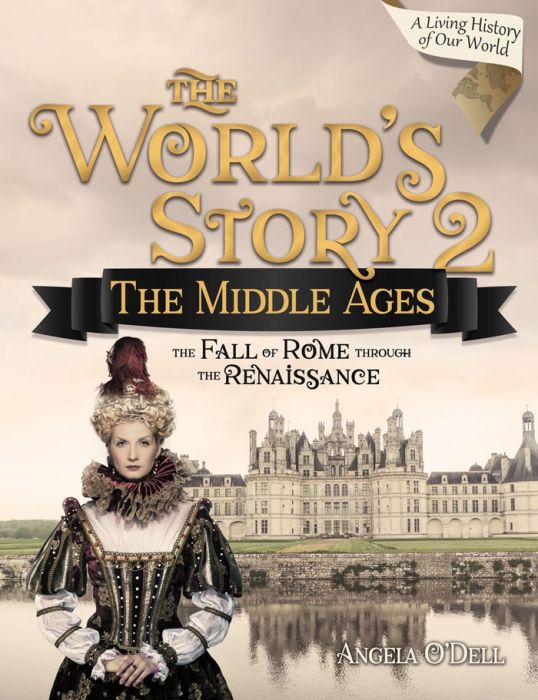
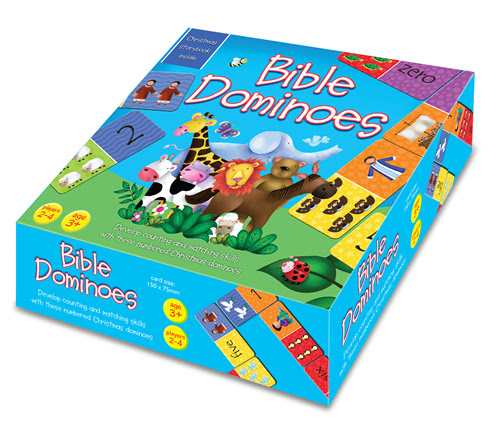
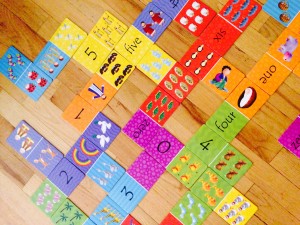 My kids do like playing with the dominoes. My five year old (who was four when we received the game a few months ago) said, “Mom, I think this game is a little easy for me.” But he asks to play it nevertheless, and has a good time helping his younger brother, as well as asking many questions about the various characters and pictures.