Biblical

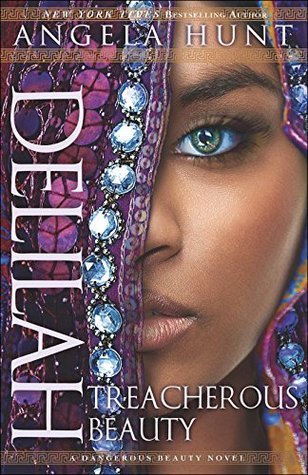
Review of Delilah: Treacherous Beauty by Angela Hunt

Standard

Genre: Biblical Fiction

Series: Dangerous Beauty (Book 3)

Recommended.

delilahI did not love the first two books in the Dangerous Beauty Series (featuring Esther and Bathsheba), but decided to give Hunt another try because I love the concept of biblical women’s stories coming to life, and have appreciated Hunt’s research and unique perspectives in her other books.

Told in the first person from the interchanging voices of Samson and Delilah, this is the best of the series so far. The Bible speaks very little about Delilah beyond her betrayal of Samson’s love. Hunt provides a background for Delilah, and further context for Samson, that is intriguing and realistic without contradicting the biblical account.

I was drawn to the story. I frequently looked back to Scripture while reading to remember whether certain details were truly mentioned (and was surprised by some of the biblical events I had forgotten!). I also thoroughly enjoyed the human perspective of Delilah, who is presented more favorably than in most Sunday school classes.

I received a complimentary copy of this book from Bethany House.

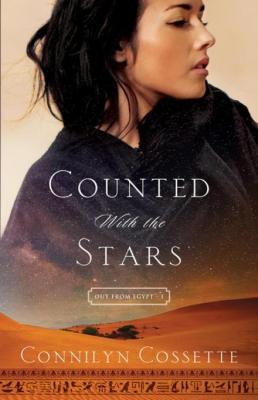
Review of Counted With the Stars by Connilyn Cossette

Standard

Genre: Biblical Fiction/History/Romance

Series: Out of Egypt, Book 1

counted-with-the-stars-by-connilyn-cossette-1441229418Recommended.

Kiya was a wealthy Egyptian, engaged to be married, when her father lost everything—selling her into slavery where she was no longer a good match for her fiancé. In slavery she becomes friends with a Hebrew girl, and experiences the plagues and Exodus from Egypt from the unique worldview of an outsider.

The historical foundation of this fictionalized account is very good; and the perspective is very interesting. The portion of the story when the Hebrews cross the sea, and their time in the wilderness is particularly well done. I was less impressed with the plagues, and found much of the narrative (especially the beginning and very end) to move too slowly, even though the content is solid.

I also could have done without the romance, which felt a bit cliché—although maybe this is what people want? The story could have been stronger by focusing more on the friendship, identity issues, and religious experience of the women without the distraction of finding Kiya a suitable mate.

I loved the fresh perspective of the Exodus, which brought the biblical story to life.

I received a complimentary copy of this book from Bethany House.

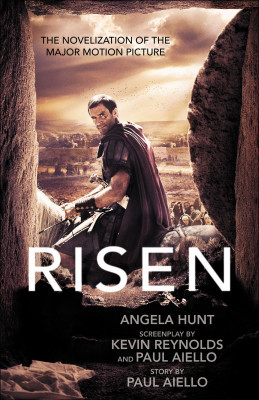
Review of Risen: The Novelization of the Major Motion Picture by Angela Hunt

Standard

Genre: Biblical Fiction

Not Recommended.

COL_BILL_TEMPLATE_17Yeshua’s (Jesus’) resurrection is told through the paralleled perspectives of Roman Tribune, Clavius (who is tasked with overseeing the crucifixion and tracking down Yeshua’s body when it mysteriously goes missing), and a Jewish widow, Rachel, with whom Clavius is having an affair.

Risen starts strong: it is well contextualized within its authentic historical setting (with a couple very minor exceptions), has interesting characters with relatable flaws and struggles, and offers new perspectives of Yeshua’s death and resurrection.

Unfortunately, the emotional development of the main characters is not carried through to the end of the narrative, and toward the end the story fell flat. The final chapters felt like an attempt to fit as much of Scripture as possible into the story, and were awkward to read. I also wanted more development and conclusion of some of the dramatic plot moments leading up to the end. Likewise, I was disappointed by the glaring omission of Yeshua’s ascension into heaven, which is theologically one of the most significant aspects of His resurrection.

I have heard great things about the Risen movie, and understand that the book is quite a bit different—adding characters and content. So while I did not love the book, I am looking forward to seeing the film when I get the chance.

I received a complimentary copy of this book from Bethany House.

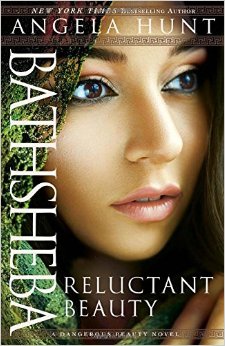
Review of Bathsheba: Reluctant Beauty by Angela Hunt

Standard

Genre: Biblical Fiction

Series: Dangerous Beauty (Book 2)

51ximKyn5jL._SY344_BO1,204,203,200_This narrative of Bathsheba’s life covers a large portion of Scripture from the moment that King David spies and acquisitions Bathsheba to the moment when Solomon is finally crowned king. It is carefully written not to contradict Scripture, while creatively adding in character and plot details to capture the larger picture of the biblical story.

Those familiar with these Scriptures will remember the prominent sins (lust, rape, murder, jealousy, pride, etc.) that may not be appropriate themes for younger readers. The opening chapters were pretty sensual compared to other fictitious Christian works (i.e. beginning with Bathsheba’s marriage to Uriah, her subsequent rape by the king, and an oddly misplaced moment of the prophet Nathan envisioning Bathsheba while being intimate with his own un-loved wife). The story is told in the first person from both Bathsheba and the prophet Nathan’s perspective in succinct alternating chapters. The author’s choice to cast Nathan as a love-struck guardian over Bathsheba felt inappropriate to me even with the human plausibility factor.

The story also lacked anticipation at times. That is, it moved slowly—not because the details were uninteresting, but because the character motivations were not always strong enough to create enough suspense to pull the story along. It is a captivating narrative because it provides an interesting take on familiar biblical characters; but if it were not for the Bible, the story would not have enough substance to move it forward.

Overall I enjoyed reading this for its intriguing perspective—not just of Bathsheba, but of David, the politics of his kingdom, and the relationships within the royal household. It motivated me to revisit the biblical stories, and (for the most part) kept my attention. But, I also think these characters and this story could be fictionalized better.

I received a complimentary copy of this book from Bethany House.

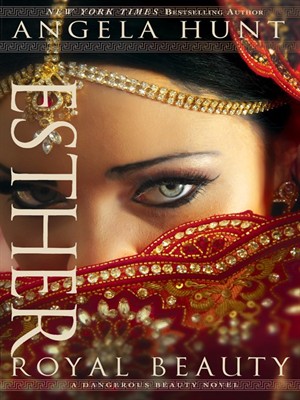
Review of Esther: Royal Beauty by Angela Hunt

Standard

Genre: Historical/Biblical Fiction

Series: Dangerous Beauty{DD3AF05F-C83B-4AE2-A5DA-BAE50C39EA2D}Img400

Recommended.

Happy Purim! Esther is one of my very favorite biblical heroines, so I’ve read several fictional renditions of her story. Angela Hunt provides a fresh look at the book of Esther. This unique narrative creatively pulls together one potential historical scenario, beginning with a young teenaged Hadassah, and sharing details beyond the biblical record based on the author’s research (especially of the Greek historian Herodotus).

I did not love Hadassah’s character in the opening chapters: she is immature and annoying, focused on girlish fantasies of living in the wealth of the palace as a lover of the King, and as one assimilated into the Persian culture. I set the book down after only a couple chapters because I was having trouble getting into it. But when I resumed reading, I began to quickly engage in the story. Esther soon becomes a very likeable queen, and the transformation in her persona makes her more relatable, and emphasizes God’s work in her.

I also enjoyed the dual perspective that this narrative is written from: half from the perspective of Hadassah, interspersed with chapters from the perspective of one of the King’s eunuchs, Harbonah. Almost all of the story is “new” and from a unique and interesting viewpoint, so the details stood out and caused me to think beyond the story to consider the characters (especially the motivations of the King) in a new light. I found it a particularly interesting twist that Esther desired the company and affections of the King, since I’ve typically heard the story differently—but realized that if God gives us the desires of our hearts, why not also give Hadassah the desire to fulfill her calling as the Persian Queen?

This was enjoyable to read, would be interesting to discuss in a group setting, and—because it did not have a strong message beyond painting the historical picture—has the open-ended gift of speaking to different people in different ways.

I received a complimentary copy of this book from Bethany House.

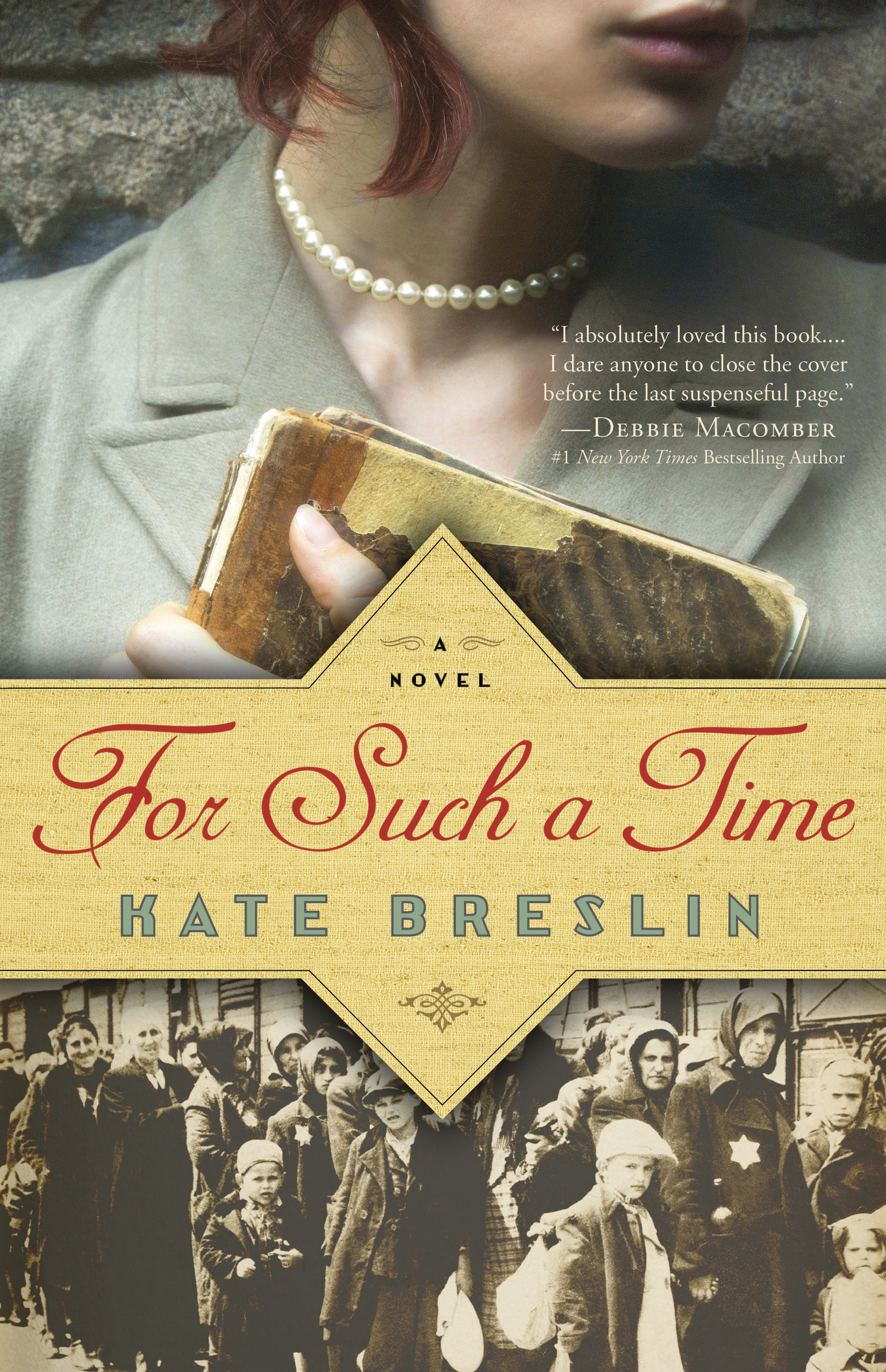
Review of For Such a Time by Kate Breslin

Standard

Genre: Historical Romance

Recommended.

For Such a Time is a unique retelling of Esther based during the Holocaust. Hadassah Benjamin (hiding under false paperwork as Stella Muller) is rescued from a shooting line and finds herself in the odd position of working as a secretary for SS Kommandant Colonel Aric von Schmidt while her fellow Jews (including her uncle Morty) endure the harsh conditions of the Czechoslovakian transit camp, Theresienstadt, that borders her new “home.” Worse, her people are progressively being transported to Auschwitz, and she is ordered to type up the lists of names finalizing their transportation and certain death—all while hiding her true identity, struggling with her faith, and feeling that God has abandoned them.

I enjoy how this narrative finds freedom in expressing the heart of the Esther story outside of its traditional setting. The events, especially in the climax and finale, unravel creatively, so as to bring fresh insight to the original.

There is a bit of awkwardness surrounding the romance between Stella and Herr Kommandant—but perhaps this was true of Esther and the Persian King as well within their married relationship? I would have liked more attention to have been given to Aric’s faith and feelings, which were alluded to on many occasions, but never explored to the extent of Hadassah’s. I also felt there was too much emphasis placed on Stella as the savior of her people (rather than an emphasis on the recognition of God at work); and also too quick of a spiritual spiritual resolution for Stella’s own question of faith.

That said, the book does well at its intentions to entertain, bring freshness to a beloved biblical account, and to reveal and remember the horrors of the Holocaust and God’s faithful presence even in our most difficult hours. This is also a wonderful debut novel to start off Breslin’s endeavor into historical fiction.

I received a complimentary copy of this book from Bethany House.

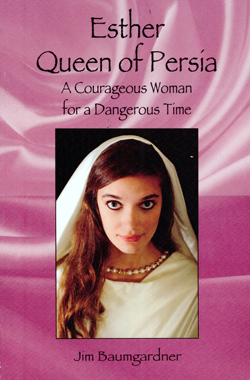
Review of Esther Queen of Persia: A Courageous Woman for a Dangerous Time by Jim Baumgardner

Standard

Genre: Historical Fiction

Recommended.

Finally, an Esther narrative that is intentionally true to the historical account! This book is well researched, and the biblical gaps are realistically portrayed to correspond with the foundation of Scripture.

It took me a couple chapters to fully engage with the characters, but then I was captivated. Esther is wonderfully presented as a humble and intelligent young woman in addition to her outward beauty. I wondered if a male author could adequately present the emotions behind her situation—being forced to throw away her dreams of a Jewish marriage to unite with a king who has so many other wives and concubines and who could have even rejected her after just one night of sexual intimacy. Baumgardner’s depth into Esther’s character, however, is right on the mark. It is a heart-wrenching story that delves far beneath the surface into the complex identity of Hadassah/Esther.

I will say, I don’t think the book’s cover fully expresses the depth of its content. The cover illustration of Esther is beautiful, but I think would be better presented over a full-sized scene of Shushan with Esther in the foreground—comparing her humility with the pagan extravagance of the Persian empire. The writing itself presents this context well. It is hard not to feel for Esther’s situation, and to marvel at her response in the midst of a difficult time.

I was also a little thrown off by an embellishment at the end with integrating the battle techniques of the Chinese. While this addition is historically possible, I thought it distracted from the fluidity of the story, and its focus on the faithful and dependable God of Israel.

Even so, this is the best fictional rendition of Esther I have read thus far. I really enjoyed the historical detail to the 5th century B.C. world, the well-developed characters, and the integration of the Scriptures—not just from the Book of Esther, but from many other books of the Tanakh (OT) that the characters would have been familiar with as an oral foundation for God.

I received a complimentary copy of this book from the author, Jim Baumgardner, for the purpose of providing an honest review.

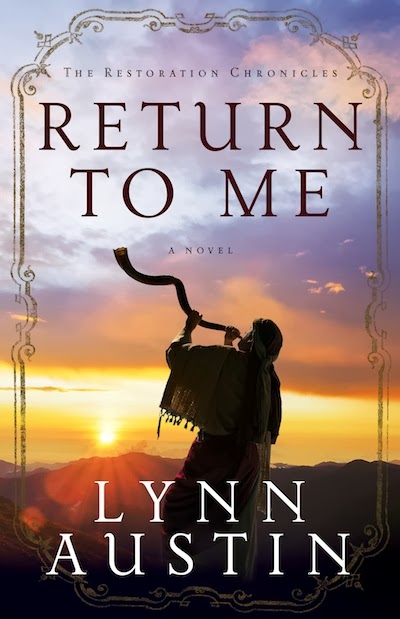
Review of Return to Me by Lynn Austin

Standard

Genre: Historical/Biblical Fiction

Series: The Restoration Chronicles Book #1

Not Recommended.

Return to Me focuses on the return to Jerusalem after the Babylonian exile, and the rebuilding of the temple. It is at this time in Jewish history that the faith is restored, liturgy is developed, and a structure is put into place in order to help the people return spiritually to God just as they have spiritually. Austin’s story demonstrates this in part, but not with accurate supplementing detail.

For instance, she portrays the Men of the Great Assembly as a functioning entity prior to the return, and also mentions the building of a fence around the Torah, but both are not formed until after the return. Rather they are introduced during the rebuilding process as the Jewish people demonstrate the renewal/re-dedication of the covenant. While there was a faithful remnant during the exile, it is very unlikely that serious devotion to Torah was being practiced (and especially not in formal yeshivas). Austin also describes other aspects of Modern Judaism that also would have been out of place at this time (e.g. the practice of kindling the sabbath lights comes from the Middle Ages).

To an extent, it may be positive that the Judaism described reflects modern rather than ancient practices. It is beneficial for the church to recognize modern Jewish culture, and in a way, brings the modern reader into the story (which is thematically very relevant for today). However, I am pursuing an M.Div. in Messianic Judaism, and had just finished a course in the history and practice of Jewish liturgy when I began reading this book. Due to my growing knowledge of Jewish history and culture, I was so distracted by the lack of historical accuracy within Austin’s presentation of postexilic Judaism that I could not relax and enjoy the story. It is too bad, because I love this kind of historical/biblical fiction, and especially love the second temple period.

Readers who are looking to understand the broad strokes of biblical history, and are less concerned with accuracy in the details, will likely enjoy this book. The characters are well-developed, the story flows well, the writing style is enjoyable, and there are moments of (I believe) divinely inspired insight. I would read another book from Lynn Austin; but this one I just could not enjoy properly.

I received a complimentary copy of this book from Bethany House.

Review of A Reluctant Queen: The Love Story of Esther by Joan Wolf

Standard

Genre: Romantic Historical Fiction

Not Recommended.

Joan Wolf offers a fresh perspective on the story of Esther, and she gave me a lot to think about. But this story takes too many liberties with its historical account—let alone its biblical one. There were small errors, like Esther being called Esther before the contest to become queen, rather than by her Hebrew name, Hadassah, and Haman being portrayed as an Edomite when he was actually an Agagite, and the use of the Hebrew calendar in setting Persian decrees. But there were also larger issues: changes to the royal line, like with King Ahasuerus having a brother Xerxes (most scholars believe they are one in the same), and the Prophet Obadiah attempting to stir up unrest in Palestine (while the biblical Obadiah was not prophesying at the same time as Esther’s reign and the stories do not naturally fit together).

As a story, I also felt that many places—especially in the beginning and end—were a bit rough. The first few chapters were especially awkward as the historical setting was laid through the dialog rather than the narration. I was also hoping it would have a bit of a Jewish feel, which it did not. And the end was, unfortunately, anticlimactic—certain deviations from the original story took away from the drama and suspense of the plot. Frankly, I’m surprised that some of the best moments of Esther’s story were omitted!

Overall, I’m glad I read A Reluctant Queen because it did help me to think about Esther, and myself, in a new way. But I also can’t recommend it; it’s in need of some serious editing!

I received a complimentary copy of this book as a part of the Thomas Nelson Book Review Blogging Program through booksneeze.com.