Gender Studies

Review of Distinctly You: Trading Comparison and Competition for Freedom and Fulfillment by Cheryl Martin

Standard

Genre: Christian Living/Women’s Issues/Motivational

Recommended.
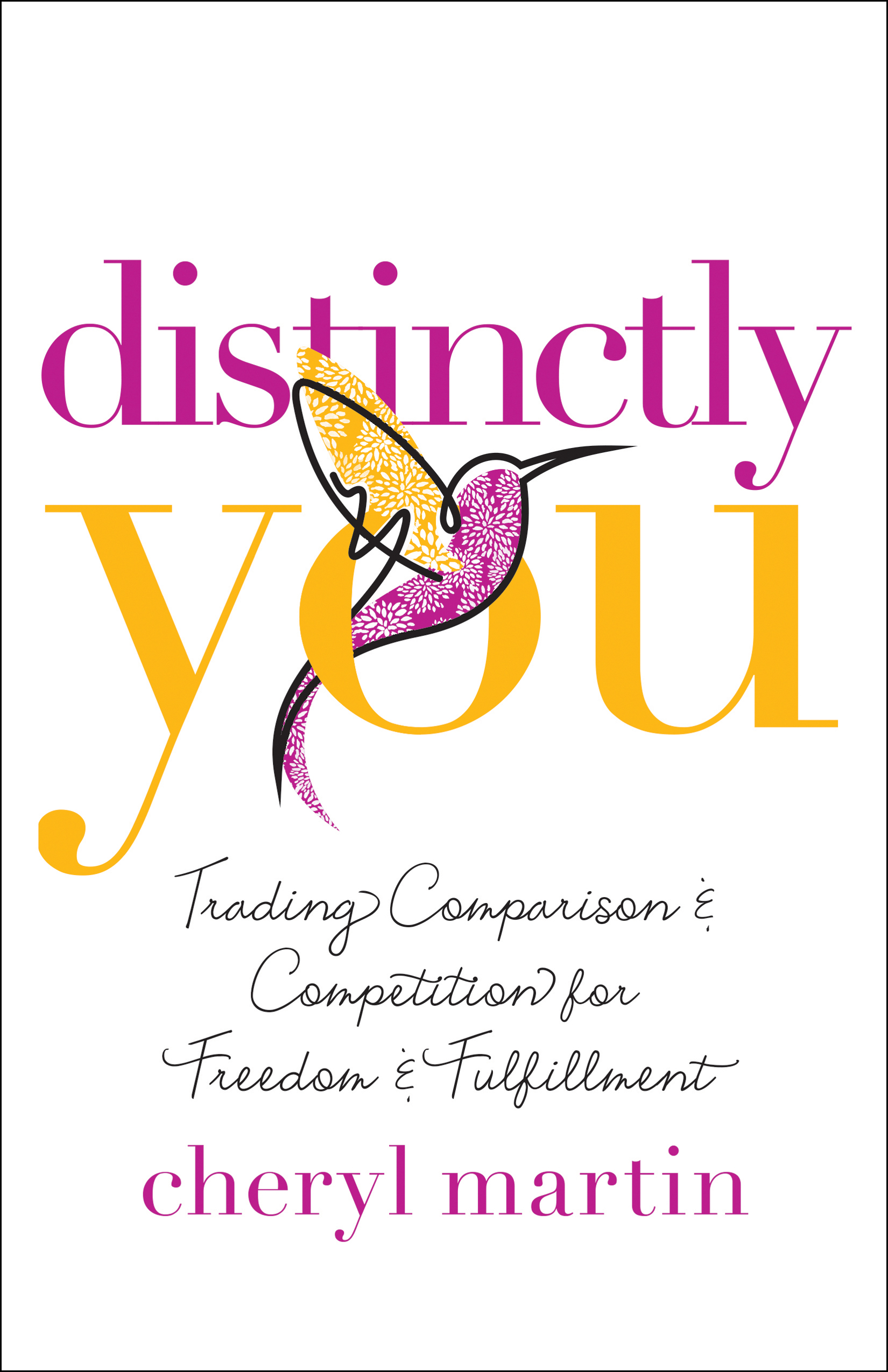
9780764215865This easy-to-read devotional style book encourages women to recognize and value the distinct calling God has placed on their lives, and to be grounded in the Lord, rather than pursuing comparison, jealousy, competition, and weighty personal expectations. The author shares candidly, in succinct chapters, from her own experiences in the areas of relationships (dating, marriage, and divorce), college and career pursuits, failures, and trusting God through every season.

This would be perfect reading material for young women undergoing a life transition (like high school or college graduation), for someone delayed in a desired transition (like the pursuit of marriage, or job), or for someone looking to build self esteem while connecting with God.

The content was engaging and Christ-focused throughout, although I did find myself loosing interest toward the end, partly because I am not currently in the situation of needing inspiration in these areas.

I enjoyed the way that Scripture was integrated alongside personal stories, and found the length of each devotional chapter ideal for quick, reflective reading, while the devotional questions were thoughtful and introspective.

I received a complimentary copy of this book from Bethany House.
Review of The Underground Girls of Kabul: In Search of a Hidden Resistance in Afghanistan by Jenny Nordberg

Standard

Genre: Social Science/Women’s Studies

Recommended.unnamed

If you are interested in what it’s like to be a woman in Afghanistan, this is the book. It also has much to offer the field of gender studies in general.

This is different than the books I typically review in that the focus was on the social sciences (psychology, sociology, gender studies) rather than on religion. I did not quite realize what I was getting into with this one, but did find it fascinating and enjoyable.

Swedish journalist (now New Yorker) Jenny Nordberg shares from her time in Afghanistan researching the role of women in that culture, and especially the phenomenon of girls living as boys (which could be practiced for many reasons including to bring a son-less family honor, or to give freedom to girls who would otherwise be trapped in the segregation of society). She fluidly illustrates what it was like to speak with various women who have had experience as bacha posh and relays pieces of their stories. Multiple women were interviewed for the book, among them: An educated political women who shares a husband with another woman, and also has a daughter living as a son. A female doctor, who had been raised as a boy, and now faces the humiliating situation of being a divorced woman and mother. An unmarried woman who continues to live as a man despite external pressure to live otherwise. And a women who, by living as a man, has the freedom to drive a car and teach tae kwon do. Nordberg’s translator, also, is a culmination of several women, and demonstrates an additional perspective.

One interesting aspect of the book to me was that “living as a man” essentially translates to having the freedoms of Western women in wearing pants, going out of the house, driving, having an education, and so on. In one moment, Nordberg asks a woman what it would look like for her to become a man, and the woman responds that she is living as one already.

These illustrations go beyond the typical conversation of gender and sexuality, and into an analysis of the place and lifestyle of living out those truths. What makes a woman a woman? The dialog also goes briefly into many interrelated details including marriage, divorce, abuse, sexuality, religion, and even history. While my perspective is more conservative than the author’s, I was nevertheless intrigued by her observations and commentary.

For more on the author and book, check out her website.

I received a complimentary copy of this book from Crown Publishers.

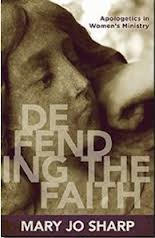
Review of Defending the Faith: Apologetics in Women's Ministry by Mary Jo Sharp

Standard

Genre: Christian Life/Women’s Issues/Apologetics

Highly Recommended.

Female apologist, Mary Jo Sharp, demonstrates how apologetics is not simply defending our beliefs or arguing with adverse perspectives, but in learning how to think for ourselves to understand what we truly believe about God and the Bible and why. Those who are confident in what they believe, and who have honestly thought about what they know, can begin to live what they believe, talk openly about faith issues with others, and have a more enriching personal relationship with the Lord.

Sharp reveals the great need for apologetics to be integrated with women’s ministry, and shares her observations of its many benefits. Then, she illustrates some of the ways to get started in bringing together these two important ministries.

When the women of the church have learned to think and study the Christian faith for themselves, they can actively engage each other and non-Christians in thought-provoking conversation: listening, asking questions, and continuously refining their own faiths without fear of not knowing enough, or being proved wrong. My favorite section of the book, in fact, was in how to use questions to listen attentively, and love others, without becoming defensive or overly emotional about defending ones own opinions. In this way, all participants in the conversation are held accountable to what they say and believe, and the conversation becomes a journey for exploring the important issues with more depth.

I am an avid learner and seminary student who is already sold on the high importance of apologetics in ministry, but until reading this, I had honestly not considered that there should be a consistent merger between apologetic study and women’s ministry. It is a thin book, but one that has changed the way I think about apologetics, the needs within women’s ministry, and even of my own approach to evangelism.

My only criticism is that the cover art does not reflect the freshness of Sharp’s ideas and presentation. While apologetics has (among many people) certain connotations of being a stagnant academic field of archaic arguments—somewhat like the statue in the picture—this beneficial manual could be the catalyst for many to begin loving the Lord with all the heart, soul, and mind; and to create a new excitement for living out and sharing ones faith.

I received a complimentary copy of this book from Kregel Publications.

Review of Fearless Daughters of the Bible by J. Lee Grady

Standard

Genre: Christian Life/Personal Growth/Gender Studies

Highly Recommended!

Fearless Daughters of the Bible edifies Christian woman to boldness in the Lord through biblical stories integrated with examples from history and personal commentary. Each chapter focuses on a woman from the Bible who had courage in a particular area; for instance: “The Five Daughters of Zelophehad: The Courage to Challenge Tradition,” “Hannah, the Mother of Samuel: The Courage to Believe God,” or “Priscilla, Spiritual Daughter of the Apostle Paul: The Courage to Mentor Others.” The chapters cover a great variety of women and circumstances—some widely known, like Mary, the mother of Jesus, and some lesser known, like Achsah, Daughter of Caleb. There are also questions and a personal message at the end of each chapter, making this an ideal book for an independent or group devotional study.

My favorite chapter was on the Samaritan woman whom Jesus met at the well. I have heard commentary on this story so many times, and yet Grady shared details of the event that I had never considered. I had never realized, for instance, that the well was on the same land where Dinah was raped. I have been learning lately about the deep importance (and spiritual ramifications) of location; so, these details about the land of Samaria added so much to the otherwise familiar account. It also caught my attention that, unless her encounter with Jesus had caused a very visible and distinctive change, this women—who had experienced so much rejection—would never have been believed by so many in her city. And yet, the scriptures show the woman at the well as a successful evangelist, bringing salvation to many by sharing her encounter with the Lord (John 4:39-42).

As cliche as it may be to say: every Christian woman could benefit from this book! It is encouraging, insightful, and lovingly written by a man who greatly desires to edify women in their personal callings. For more information about the author, check out his ministry: The Mordecai Project.

I received a complimentary copy of this book from Chosen.

Review of Trained in the Fear of God: Family Ministry in Theological, Historical, and Practical Perspective edited by Randy Stinson and Timothy Paul Jones

Standard

Genre: Spiritual Growth, Gender Studies, Family Ministry

Not Recommended.

Trained in the Fear of God began so well I was reading it with a highlighter. I was excited by statements like: “Christian households and churches are not shelters from the conflict; they are gospel-empowered training bases for the conflict” (14); such a strong case was made for the importance of family ministry that I was excited to learn how to apply it within our household and congregation. Unfortunately, I really felt the book fell short of it’s introduction. It was “okay” and certainly informative, but it didn’t engage me or offer anything new or exciting to make seeking out this particular book worthwhile. Actually, I found the tone of the writing to be negative in several places, rather than encouraging and edifying to the body at large.

Structurally, this book is actually a collection of shorter, academically written, articles arranged into three topical sections: 1) the theological basis of family/church structure (especially in regard to gender roles), 2) the historical views of family discipleship within church history, and 3) the practical application of bringing a strong spiritual tradition into our homes. The articles themselves are completely independent from each other and written from a variety of authors. I read each article with various degrees of interest and enjoyment. A few of the articles I really enjoyed, many I found informative but didn’t personally connect with, and many others I just really didn’t like for various reasons. The advantage of this structure is that it can be read in any order or amount and used as a reference book. However, this is a surprisingly small book to be an anthology, and most of the articles were not very thorough, so in general I felt the structure hindered the message of the text. I think it would have been more powerful for the authors to focus in on the most important issues (say, the biblical framework of family ministry) and to write cohesive chapters with a climatic build of information and a direct application of the principles being taught. I felt instead that the book was trying to cover too much with little success.

I also want to mention that the book focuses heavily on the family and church being led by men and supported by women as a definite secondary role. I actually do agree that men and women are created distinctly, with unique purposes. But the emphasis, I felt, was inappropriately exaggerated as there is much more depth and beauty to how God created us than what I felt this text implied. Just as there is both a distinction and a unity between Jewish and Gentile believers, so is there an appropriate balance between the roles and partnership of male and female believers. The upset of how this balance was described in this book really hinders the message of family ministry, and, despite its intention to reinstate a positive family structure, was discouraging to that mission.

I received a complimentary copy of this book from Kregel Publications.

Review of Why Men Hate Going to Church (Revised and Updated) by David Murrow

Standard

Genre: Gender Studies/Church Growth

Loosely Recommended.

This is a love it or hate it kind of book and I experienced a bit of both.

Murrow makes many sweeping generalizations of gender differences and occasionally even of denominational differences, many of which I found offensive. He comments frequently that women are smarter than men, more studious, musical, and religious, while church-going men are wimpy, effeminate and unmanly. I see where he’s going with this—that some personalities are fit for “church culture” while others are not—but his gender stereotypes are grossly exaggerated.

I also had a problem with his goal-oriented interpretation of history. Throughout his writing, he briefly explains moments in church history, each time giving story-telling precedence over facts. He has interesting theories, but they aren’t grounded in evidence. In fact, most of his writing is based on observation rather than good research.

If we followed his advice, every congregation would be a mega-church (in style and growth). But is this what we want? It’s not what I want.

But despite all this, he does make some interesting arguments, bringing many insights to the table that would otherwise be overlooked. He mentions, for instance, that a sense of mission and adventure have been missing from the way churches present and carry out the gospel message. I agree. I don’t think this is a gender issue so much as a whole church issue. He also demonstrates that the church operates in a very slim selection of spiritual and practical giftings while many “more manly” giftings are left out. Again, I don’t see this as exclusively a gender problem, but I’d agree that the traditional church set-up does not cater to every learning style or personality. I also liked his criticism of the “romancing” of the gospel. While the Bride of Christ is one of my favorite analogies, it’s taken too literally in many circles, and this kind of Jesus-is-my-husband thinking isn’t healthy for men or women.

This would be a great book for small group discussion. It brings up so many questions and is an excellent starting point for many heated (and productive) discussions—largely due to the the author’s strong and controversial opinions.

I received a complimentary copy of this book as a part of the Thomas Nelson Book Review Blogging Program through booksneeze.com.