Apologetics

Review of The World's Story 1: The Ancients (Student Book) by Angela O'Dell

Standard

Genre: Ancient History Curriculum/Christian Worldview

Highly Recommended!
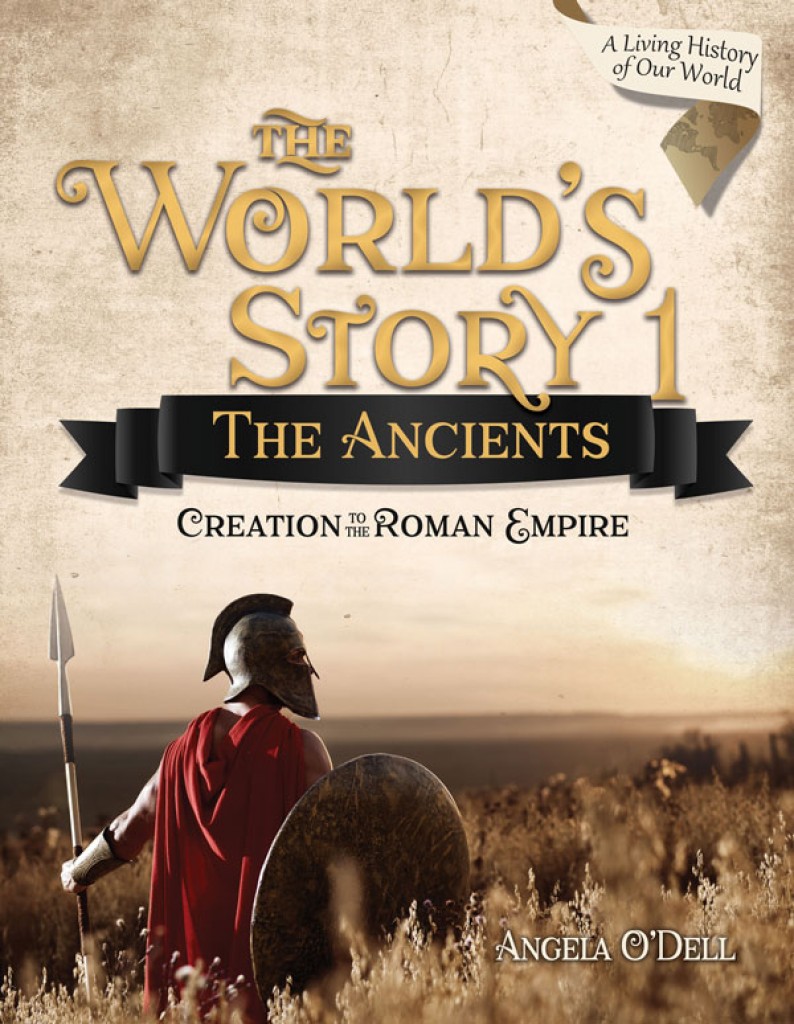
I love everything about this curriculum. The student book is filled with photos, illustrations, and maps that are as stunning as they are helpful and informative. The lessons are engaging, without being overwhelming. And the material of the Student Book is written in an accessible narrative form that could easily be used with multiple age groups or a full-family study. I also love the narration breaks and connection points within the text, which provide helpful markers for the parent-teacher (or independently working student) to pause and reflect before moving onward.

While many textbooks covering ancient civilization include a focus on mythology, this one is awesomely biblical-centric. It more-or-less follows the biblical timeline from Creation through the Roman Empire, with an emphasis on the Hebrew people and their neighbors (Sumer, Babylon, Egypt, Persia, Greece, Rome, and others in between). I love the addition of apologetics and archaeology, and the emphasis on a relational/Hebraic worldview of Scripture. Every chapter goes back to Scripture in some way—even ancient cultures that are not directly tied to biblical accounts (like China, the Celts, and tribes in the Americas) have a mission-focus, and/or demonstrate humanity’s need for God in a direct manner. I really appreciate this perspective, and the way faith and Scripture are woven throughout the lessons.

My kids are going to have so much fun with this. I can’t wait for volumes 2 and 3 to be released!

I received a complimentary copy of this book from Master Books.


PS: Those interested in using this as a homeschool curriculum should consider purchasing with the corresponding Teacher’s Guide, which includes a suggested 180 day schedule, assignments (aimed at 5th-8th grade), and supplementary ideas.

You don’t have to homeschool to enjoy this! Read the Student Guide alone as an engaging devotional resource on ancient history from a biblical perspective.

Explore Master Books website here.
Review of Keeping Faith in an Age of Reason by Jason Lisle

Standard

Genre: Apologetics/Bible Resource

Recommended.

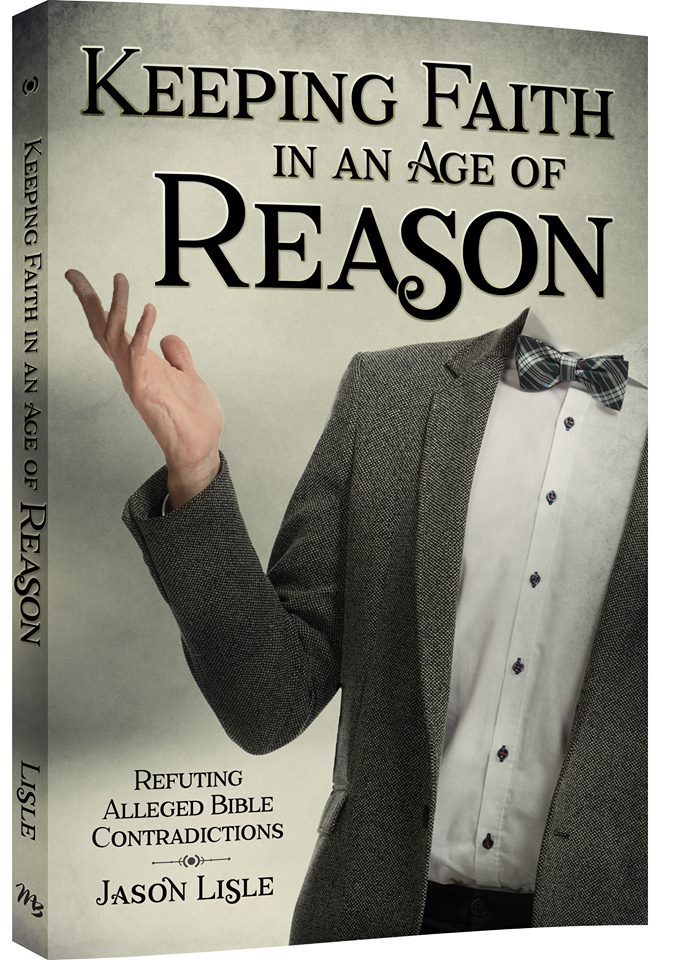
This is an excellent resource for addressing areas of confusion or criticism within the Bible.

Lisle begins by introducing common fallacies, then works through 420 alleged contradictions to show where Bible critics have faltered in their logic, and how the Scriptures in question actually fit together.

The biblical “contradictions” are arranged in thematic sections: Quantitative Differences, Names, Places, and Genealogies, Timing of Events, Cause and Effect, Differences in Details, and Yes or No Questions. It is also easy to search for specific chapters of the Bible, using the Scripture Index in the back.

A wide range of passages and concerns are addressed, ranging from details one might not consider (e.g. #49: For how much did David buy the threshing floor?, or #186: To whom were the cities of Exhtaol and Zoreah given?), to larger theological concerns (e.g. #185: Is circumcision required?, or #329: Is God the creator of evil?). Although many of the contradictions could be addressed more thoroughly (and to include theological variances within the Christian perspective), I really appreciate the succinctness and clarity of each point, and the focus on thinking through the logic of each criticism. The practice of critical thinking—both within and outside of one’s own perspective—is essential to having a strong foundation of faith; and this text allows readers to practice this skill.

Teens and adults who want to have a stronger grasp of apologetics will find this a helpful guide in affirming and defending their faith.

I received a complimentary copy of this book from Master Books.

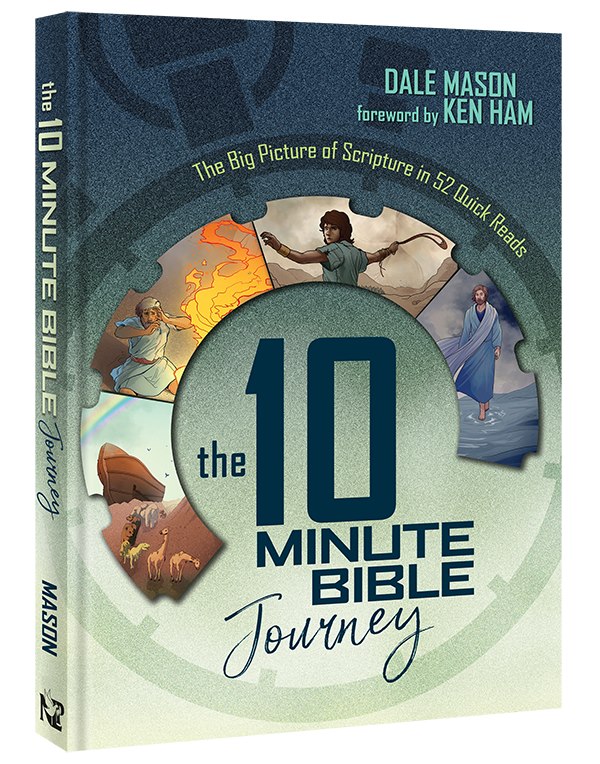
Review of the 10 Minute Bible Journey by Dale Mason

Standard

Genre: Family Devotional Bible

Highly Recommended!

I’ve been asked several times recently whether I have a favorite Bible devotional for homeschooling, and can tell that this is going to be our new favorite. It goes through the Bible from Creation to “Forever” in 52 stories of the biblical accounts, plus an additional 8 bonus sections on select topics, and a 2.5 foot fold-out timeline.

Each devotional can be realistically completed within 10 minutes (I timed myself reading a few of them, with an average of about 6 minutes each in my “mom” voice). They also include enough depth and detail to draw out into an extended conversation if preferred.

I most love: 1) the fantastic illustrations, 2) the Creationist/apologetics perspective, which even includes commentary on related issues such as the Ice Age, 3) the narrations and details within each story line (date ranges based on Ussher’s calculations, ages of characters at the times of each event, etc.) bring the accounts to life, 4) the historical chronology is thoroughly presented, even including the division of the Kingdom of Israel, 400 years of silence, and other stories that are often omitted from children’s Bibles like Isaiah’s ministry in the nude, King Josiah’s reign, and the stoning of Stephen, 5) controversial areas of theology such as the charismatic gifts, and eschatological perspectives are neutrally presented—everything follows the Bible pretty closely without adding to the story, and 6) reading the Bible itself is encouraged with a plan of daily Scripture reading, as well as footnotes for further study, and suggestions for using this devotional within a small group environment (including discussion questions).

I do have minor constructive feedback from a Messianic Jewish perspective: I do not love the word “convert” as used in the account of “The Conversion of Saul,” considering that his spiritual revelation opened him up to a born again experience, but not a new religion. He was more in line with the intentions of Judaism after recognizing Jesus as Messiah than beforehand in his legalism. Similarly, there is a negative widespread implication regarding the Pharisees. However, Paul considers himself a “Pharisee” even after becoming a Christian (Acts 23:6, Phil. 3:5), so the Pharisees are not “bad” in and of themselves, rather it was their hypocrisy and legalism that were problematic, leading them away from recognizing the Lord, rather than toward Him.

Overall, I’m very excited about this resource! You can find it at Master Books.

I received a complimentary copy of this book from New Leaf Publishing.

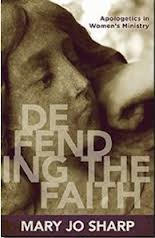
Review of Defending the Faith: Apologetics in Women's Ministry by Mary Jo Sharp

Standard

Genre: Christian Life/Women’s Issues/Apologetics

Highly Recommended.

Female apologist, Mary Jo Sharp, demonstrates how apologetics is not simply defending our beliefs or arguing with adverse perspectives, but in learning how to think for ourselves to understand what we truly believe about God and the Bible and why. Those who are confident in what they believe, and who have honestly thought about what they know, can begin to live what they believe, talk openly about faith issues with others, and have a more enriching personal relationship with the Lord.

Sharp reveals the great need for apologetics to be integrated with women’s ministry, and shares her observations of its many benefits. Then, she illustrates some of the ways to get started in bringing together these two important ministries.

When the women of the church have learned to think and study the Christian faith for themselves, they can actively engage each other and non-Christians in thought-provoking conversation: listening, asking questions, and continuously refining their own faiths without fear of not knowing enough, or being proved wrong. My favorite section of the book, in fact, was in how to use questions to listen attentively, and love others, without becoming defensive or overly emotional about defending ones own opinions. In this way, all participants in the conversation are held accountable to what they say and believe, and the conversation becomes a journey for exploring the important issues with more depth.

I am an avid learner and seminary student who is already sold on the high importance of apologetics in ministry, but until reading this, I had honestly not considered that there should be a consistent merger between apologetic study and women’s ministry. It is a thin book, but one that has changed the way I think about apologetics, the needs within women’s ministry, and even of my own approach to evangelism.

My only criticism is that the cover art does not reflect the freshness of Sharp’s ideas and presentation. While apologetics has (among many people) certain connotations of being a stagnant academic field of archaic arguments—somewhat like the statue in the picture—this beneficial manual could be the catalyst for many to begin loving the Lord with all the heart, soul, and mind; and to create a new excitement for living out and sharing ones faith.

I received a complimentary copy of this book from Kregel Publications.

Review of The Jesus Scandals by David Instone-Brewer

Standard

Genre: History/Apologetics

Recommended.

The Jesus Scandals focuses on the scandals surrounding Jesus as a way to validate and better understand Jesus and the gospel accounts. Since the Bible was written by Jesus’ loyal followers, any negative or shocking events, teachings, or actions in scripture involving Jesus should reveal and confirm Jesus’ true opinions and actions that were widely known and, therefore, not something the disciples could easily cover up. About 30 scandalous topics are discussed varying from Jesus’ associations with particular uncouth people, to rumors that He was an alcoholic, to His teachings about Hell, and everything in between.

The book is split into three sections: scandals in Jesus’ life, scandals among Jesus’ friends, and scandals in Jesus’ teaching. Each chapter (scandal) is just a few pages long and can be read independently from the others making this an ideal book for a personal devotional study or a group Bible study.

While the author does have clear opinions throughout the book, I enjoyed that the text included room for personal thought and research. I was able to stay engaged and interested in each topic even in the few cases where my own perspectives did not quite match the bias of the author. In fact, it’s written in a way that even a mixed-faith discussion group could easily use each chapter to delve into friendly discussions or debates.

I received a complimentary copy of this book from Kregel Publications.

Review of Godforsaken by Dinesh D'Souza

Standard

Genre: Academic Theology/Apologetics

Not Recommended.

I found Godforsaken instantly engaging. I loved the cohesiveness and organization of D’Souza’s writing and the grace of his arguments. So why did I strongly dislike this book? Because his theology and worldview lack basic biblical understanding.

Before D’Souza expresses his own ideas, he argues in agreement with the atheists that the Christian concept of original sin and the events of Genesis are not enough to explain why suffering exists today. The problem with his argument is that his worldview is not the Christian one—at least, not the one I see in the Bible. His academically inspired, secular theology continues in pieces throughout the book—as well as some solid theology and truly interesting points.

I personally can’t separate God’s creation of the world from the gospel—but that aside… Even if the biblical creation account was a myth, there are elements of the story that can’t be ignored, including the transfer of the dominion of the earth. The Genesis account tells that God gave dominion of the earth to Adam and Eve, but that a fallen angel disguised as a serpent tricks the humans to give up their birthright in exchange for worldly knowledge. Satan has since been the ruler of the earth, but because of Jesus’s sacrifice on the cross and resurrection from death, Christians have authority over sin and the realms of darkness. Darkness and suffering are not yet gone, but Christians can experience the fruit of the Spirit even in the worst of physical circumstances because nothing can separate us from the love of Christ. At Jesus’s second coming, suffering will be removed from the earth altogether and God will tabernacle on a cleansed earth with those who love Him. In the meantime, evil must fully blossom before it can be removed—so we can expect suffering to increase before the second coming (and also for a corresponding revival of the Holy Spirit).

D’Souza’s ideas were interesting, but I’m unsure who his target audience is. This isn’t a book for traditional Bible believing Christians. It might be of interest to an agnostic or unsure atheist, but I couldn’t recommend any new believer becoming a Christian without a solid biblical foundation, and this isn’t it. I personally can’t see this book benefiting anyone.

I received a complimentary copy of this book through the Tyndale Blog Network.