Homeschooling

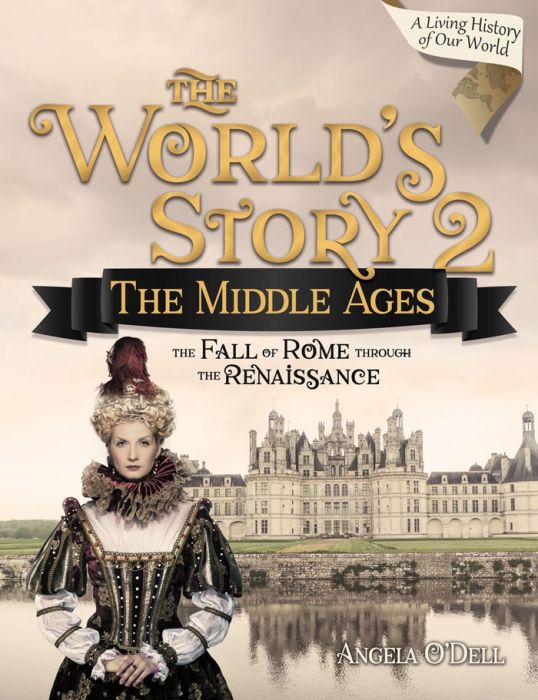
Review of The World's Story 2: The Middle Ages: The Fall of Rome Through The Renaissance by Angela O'Dell

Standard

Medieval History Curriculum

Late Elementary and Middle School

Recommended!

This is a beautiful, and engaging, book. I appreciate the short, restful, length of each chapter. The colored pictures, and maps are so helpful, and fun. Most of the lessons take place within Europe, North Africa, the Middle East, and Asia (where so much was happening); but this is an international text, that also has chapters on Africa, and the Americas.

I also appreciate the author’s honesty and humility regarding the mistakes of the church (forced conversions, violence, etc.) during this era. These darker topics are covered gently, briefly, and are prefaced with a loving spirit—so important for the younger ages (late elementary to middle school). It is similarly written from a Christian perspective—highlighting that the gods of certain cultures are false, and continuously drawing the line of truth within the text. Some of the devotional thoughts that come out amidst the stories are especially precious. For instance, there is wisdom about not camouflaging our faith, even in the face of persecution, as with the Kakure Kirishitan in Japan, who ended up with a Buddhist and Shintoist practices mixed permanently into their Christianity.

The storytelling style of writing makes this curriculum enthralling and relevant. It could easily become a high school curriculum with additional reading and writing supplemented to each lesson.

If you are looking for a light narration of history from a Christian perspective, this is an excellent series (we’ve also enjoyed World’s Story 1: the Ancients). It could be used either with or without the Teacher’s Guide, but is a complete course with both books.

Explore Master Books’ website here.

I received a complimentary copy of this curriculum from Master Books.

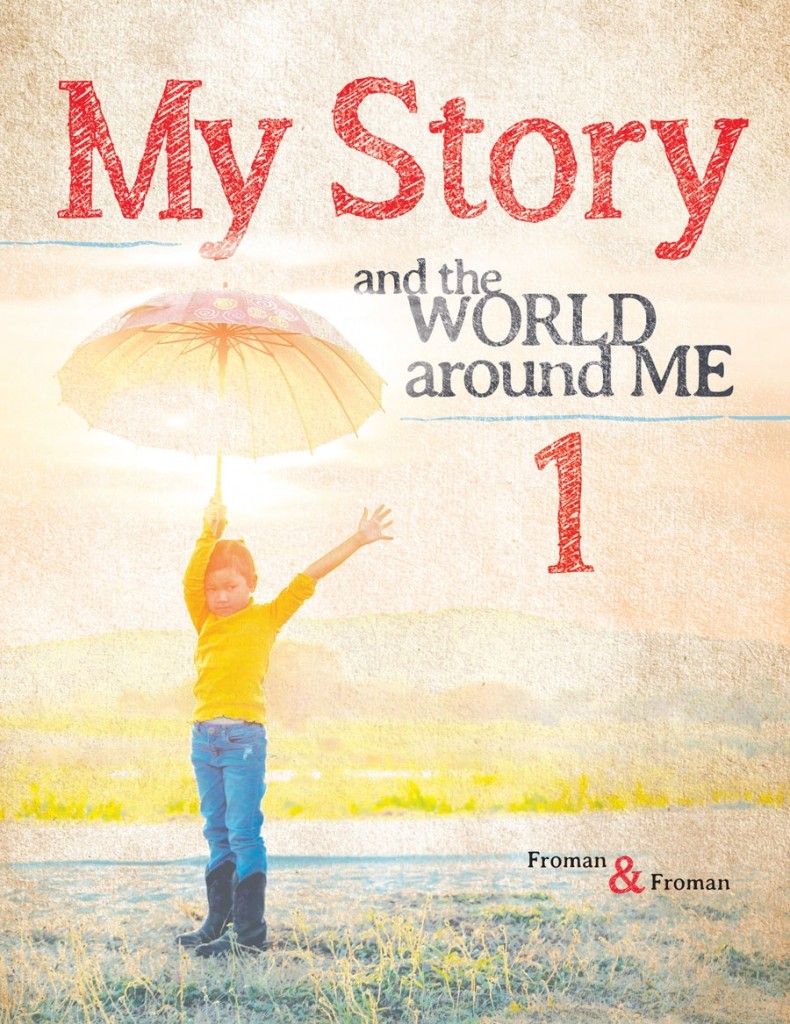
Review of My Story 1 by Craig Froman and Andrew Froman (Master Books)

Standard

Social Studies Curriculum

Early Elementary

Recommended!

What could be more exciting than a treasure-hunting curriculum full of stunning illustrations and photos?!

The students will go on four “quests”: Quest 1 begins with the student’s family, community, city, state, and country. Quest 2 travels around the Americas, Antarctica, and Africa. Quest 3 explores Canada, Russia, China, India, Indonesia, and Australia and Oceania. Quest 4 begins again in the USA, then goes to Greenland, Iceland, around Europe, and back “home” to the USA.

As students travel around the world, they will explore modes of transportation, cultures, languages, foods, wildlife, land features and habitats, traditions and responsibilities, weather, jobs/careers, water safety, time zones, continents, directions, and many other aspects of community, geography, and culture.

Students begin each quest with a clue card of questions to search for throughout the journey. The activities range from coloring, short answer, puzzles, copywork, oral discussion questions, vocab/spelling words, reading and drawing maps, and journaling. The curriculum is also biblically grounded, with Bible verses and stories throughout.

I most love the colorful pictures—this is a beautiful book (worth students having their own consumable copies)! I also appreciate the lighthearted adventure of learning, the age appropriateness, the strong faith element, and the honor of other cultures. Plus, everything is included within the single book (lesson plans, quizzes, answer key, etc.). And there are some great suggestions of (optional) field trips, for exploring aspects of community. I anticipate we will have a lot of fun with this!!

Level:

The worksheet sections are written for students who can write on manuscript ruled paper (K-2). Writing full sentences is not a requirement. Most questions could be answered in a single word or short statement. There is also copywork in every chapter to practice writing new words. This would be perfect for 1st-2nd grade, depending on the ability and interest of the student.

I’ll be using this with a kindergartener and a 3rd grader. The youngest will love it as is, and the writing will be a little easy for my 3rd grader, but I think he will be engaged by the subject matter.

Methodology:

We homeschool with a mix of Charlotte Mason and Classical methodologies (with Classical Conversations), and will be adding this as a supplement to CC Foundations Cycle 1 this coming year, which I expect will be a great complement considering its world-wide focus.

My Story 1 is a fun-loving curriculum, with lots of hands on exploration, and activity suggestions, which would fit well with Montessori, or other kinesthetic approaches. It has a large emphasis on oral and written narration, and story-telling, reminiscent of Charlotte Mason or other literature-based methodologies. It is also very comprehensive, without the heaviness of some Traditional programs.

Explore Master Books’ website here.

I received a complimentary copy of this curriculum from Master Books.

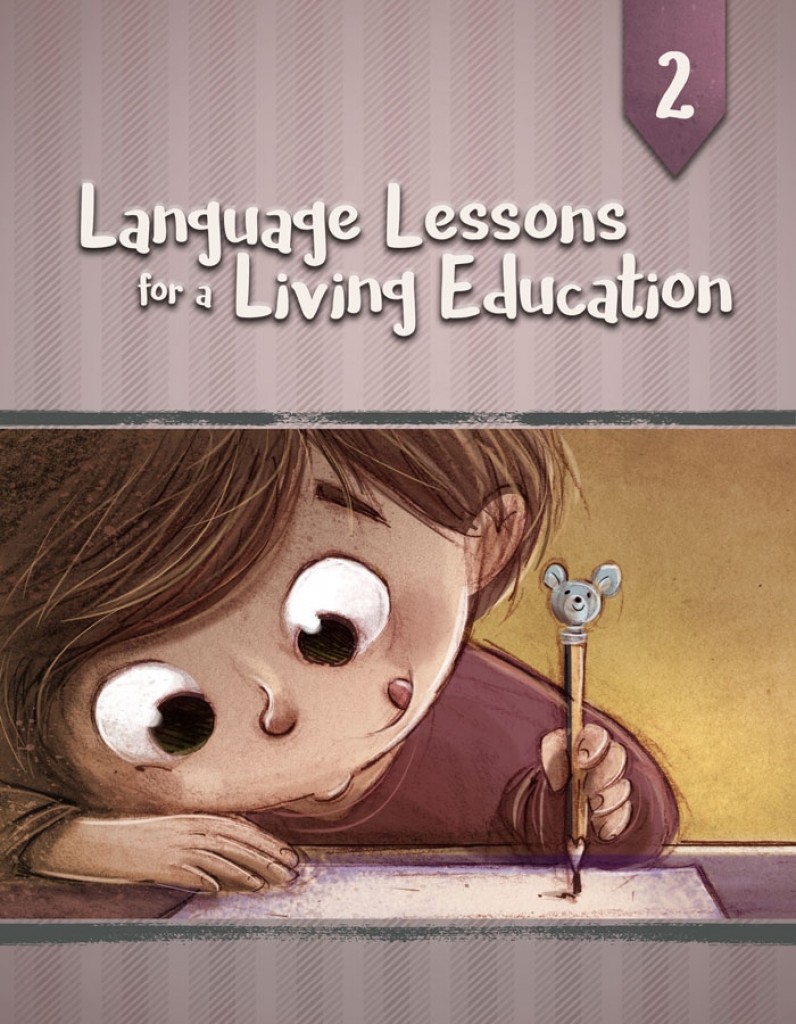
Review of Language Lessons for a Living Education 2 by Kristen Pratt

Standard

Language Arts Curriculum

Early Elementary

Highly Recommended!
I have been anticipating the release of this curriculum, and it is exactly what I hoped it would be! It has a perfect balance of comprehensive language arts instruction at a gentle pace; plus, it’s a beautiful book, with a strong Christian focus.

Each lesson begins with a story, poem, picture, or piece of Scripture, followed by questions for reading comprehension or observation skills, and narration practice as the student verbalizes what he/she heard, saw, or learned through the piece. Many of the stories follow two very likable Sunday school friends, Claire and Micah; and I love how the narration skills draw out empathy and thoughtfulness in many of the discussion questions. Many lessons end with a chance for the student to draw and/or write his/her own story.

The grammatical component starts with a review of basic skills: the alphabet, vowels and consonants, phonics, nouns/proper nouns and verbs, capitalization, punctuation, days of the weeks, and names of months. Then it moves into syllables, writing a full sentence, plurals, abbreviations, subject-predicate, subject-verb agreement, compound words, contractions, homophones, homonyms, a/an, tense, more advanced phonics and consonant blends, synonyms, antonyms, prefixes, suffixes, and root words, adjectives, demonstrative pronouns, writing and addressing a letter, and writing a psalm.

The final 100 or so pages of the book includes quizzes corresponding with each lesson, and a suggested grading rubric.

I love that this curriculum includes the full spread of language arts while utilizing a variety of learning styles and activities: hearing a story, copywork, writing (starting with simple words and progressing to sentences), sight word practice and reading, learning activities, puzzles, spelling (using boxes to show the shape of words), memorization (of short poems, Scriptures, and eventually all of 1 Cor. 13), and storytelling through writing and drawing. In the past we have done multiple L.A. curricula at once to cover all the bases. This is going to simplify our homeschool. The strong biblical foundation is also a huge blessing, as the Scripture and godly character is woven throughout.

Level Placement: 

This language arts series is not grade based, but level based. This second book follows Master Books’ Foundations Phonics curriculum, and Basic Language Skills (early reading, early writing, and spelling) curriculum. I would put this at about a 1st grade level, but it really depends on the child; and I love the publisher’s emphasis on personal skill level rather than comparison.

I will be using this with my kindergartener, who has completed a phonics program, is an early reader, and enjoys copy-work and writing. It looks like the curriculum starts slow enough that he will be ready for it, along with the other reading and vocabulary work we will do in addition.

On Methodology:

We homeschool using a combination of Charlotte Mason and Classical methodologies (and will be starting Classical Conversations in the fall), with a strong focus on faith and discipleship. This curriculum is inspired by Charlotte Mason (narration, observation), and shares the memorization emphasis of the grammar stage of the Classical Trivium. It also has a slightly Traditional feeling with the workbook, tests, and open-and-go lesson plans in the front (but is much more interesting in its range of activities). This curriculum could easy complement any methodology as it is flexible and relaxed, yet comprehensive.

Explore Master Books’ website here.

I received a complimentary copy of this curriculum from Master Books.

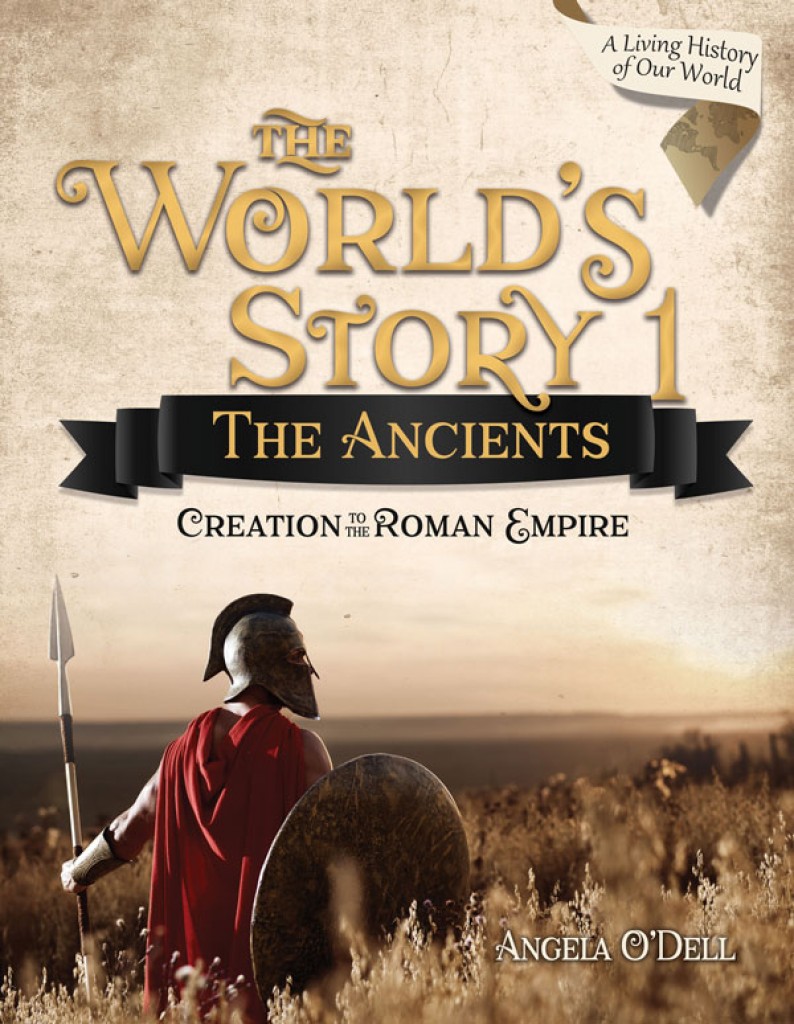
Review of The World's Story 1: The Ancients (Student Book) by Angela O'Dell

Standard

Genre: Ancient History Curriculum/Christian Worldview

Highly Recommended!

I love everything about this curriculum. The student book is filled with photos, illustrations, and maps that are as stunning as they are helpful and informative. The lessons are engaging, without being overwhelming. And the material of the Student Book is written in an accessible narrative form that could easily be used with multiple age groups or a full-family study. I also love the narration breaks and connection points within the text, which provide helpful markers for the parent-teacher (or independently working student) to pause and reflect before moving onward.

While many textbooks covering ancient civilization include a focus on mythology, this one is awesomely biblical-centric. It more-or-less follows the biblical timeline from Creation through the Roman Empire, with an emphasis on the Hebrew people and their neighbors (Sumer, Babylon, Egypt, Persia, Greece, Rome, and others in between). I love the addition of apologetics and archaeology, and the emphasis on a relational/Hebraic worldview of Scripture. Every chapter goes back to Scripture in some way—even ancient cultures that are not directly tied to biblical accounts (like China, the Celts, and tribes in the Americas) have a mission-focus, and/or demonstrate humanity’s need for God in a direct manner. I really appreciate this perspective, and the way faith and Scripture are woven throughout the lessons.

My kids are going to have so much fun with this. I can’t wait for volumes 2 and 3 to be released!

I received a complimentary copy of this book from Master Books.


PS: Those interested in using this as a homeschool curriculum should consider purchasing with the corresponding Teacher’s Guide, which includes a suggested 180 day schedule, assignments (aimed at 5th-8th grade), and supplementary ideas.

You don’t have to homeschool to enjoy this! Read the Student Guide alone as an engaging devotional resource on ancient history from a biblical perspective.

Explore Master Books website here.

Review of Teach Them Diligently by Leslie Nunnery

Standard

Genre: Christian Parenting/Discipleship

Loosely Recommended.

Written in concise, encouraging chapters for the busy parent, Leslie Nunnery uses the illustration of Moses’ exhortation to Israel in Deuteronomy 6:1-8 to encourage parents in discipling their children in the ways of God. This passage expresses the transference of faith within everyday events, as parents continuously model and speak about the glory of God within the household, through symbols, actions, holiday observance, and intentional discipleship.

This resource begins slowly—first only hinting at the significance of the passage—then eventually bringing out some practical ways of discipleship (e.g. being vulnerable with your children, making space for two-way conversation, sharing your own stories of God’s goodness, and so forth). Many parents will be motivated and refreshed by the call to raise up their children, and encouraged by the practical examples.

However, Nunnery barely touches the surface of this significant passage, which is at the heart of both Judaism and the New Testament. Moses is reminding Israel of God’s heart and law, as was received on Mt. Sinai (celebrated as Shavuot—the receiving of Torah). The beginning of Acts opens to a parallel passage as the followers of Jesus gather in Jerusalem for Shavuot (known to Christians as Pentecost), to receive the Holy Spirit. It is the marriage of the Word and Spirit together that allows us to be fully activated in faith, in personal relationship with God, in the ability to love fully, to bear each other’s burdens, to forgive, and to walk worthy of our callings in Christ. I think this resource would be even stronger if parents were encouraged in the Scriptural foundation of the Holy Spirit, which is a needed aspect of drawing together as a family (in fact, unity within the Body was one of the primary signs of the nascent church!). If we want to fully disciple our children, both teaching the Word and living in the Spirit are vital, and there are so many stories and practical applications on both sides of this picture that could be expounded upon!

I received a complimentary copy of this book from Master Books.

Review of Answers for Homeschooling: Top 25 Questions Critics Ask by Israel Wayne

Standard

Genre: Homeschooling/Christian Life

Recommended.

This is a great resource for Christian families considering homeschooling, who are unsure about certain aspects or capability, as well as for those actively homeschooling who don’t know how to respond to critical comments. It is written in a conversational manner, and includes references to other beneficial resources for new homeschool families.

I appreciated learning the history of homeschooling, and the great risks of many homeschool pioneers in gaining this freedom. This foundation was a great way to begin the book, as it left me with a deeper awareness and gratitude of this privilege.

I am also especially impacted by Israel Wayne’s commentary on socialization, which comes up frequently in my own experience. He lays a persuasive biblical foundation of the quality of companionship within the social experience, and the necessity of having proper relationships in place for learning to be possible. The argument of being “salt and light” in the world (public/private schools) is similarly addressed in a compelling manner.

Some sections caused me to think differently about certain aspects of homeschooling (e.g. whether or not to accept government funding—I hadn’t considered some of the negative implications). Other areas were less relevant to me (e.g. I’m not concerned about my teaching/academic capability, although many readers may find this very encouraging; and my husband and I have a system in place regarding our educational roles, which is different from the author’s suggestion, but works for us personally).

Overall, I was surprised by the helpfulness of this resource in addressing issues I would not have considered to ask, and providing new information interwoven with spiritual encouragement and a biblical precedent for homeschooling. I am more inspired than ever by our commitment to this form of schooling, and found the book freshly edifying.

I received a complimentary copy of this book from Master Books.