Historical

Review of Hidden Among the Stars by Melanie Dobson

Standard

Genre: Historical Fiction (Holocaust)

Highly Recommended.
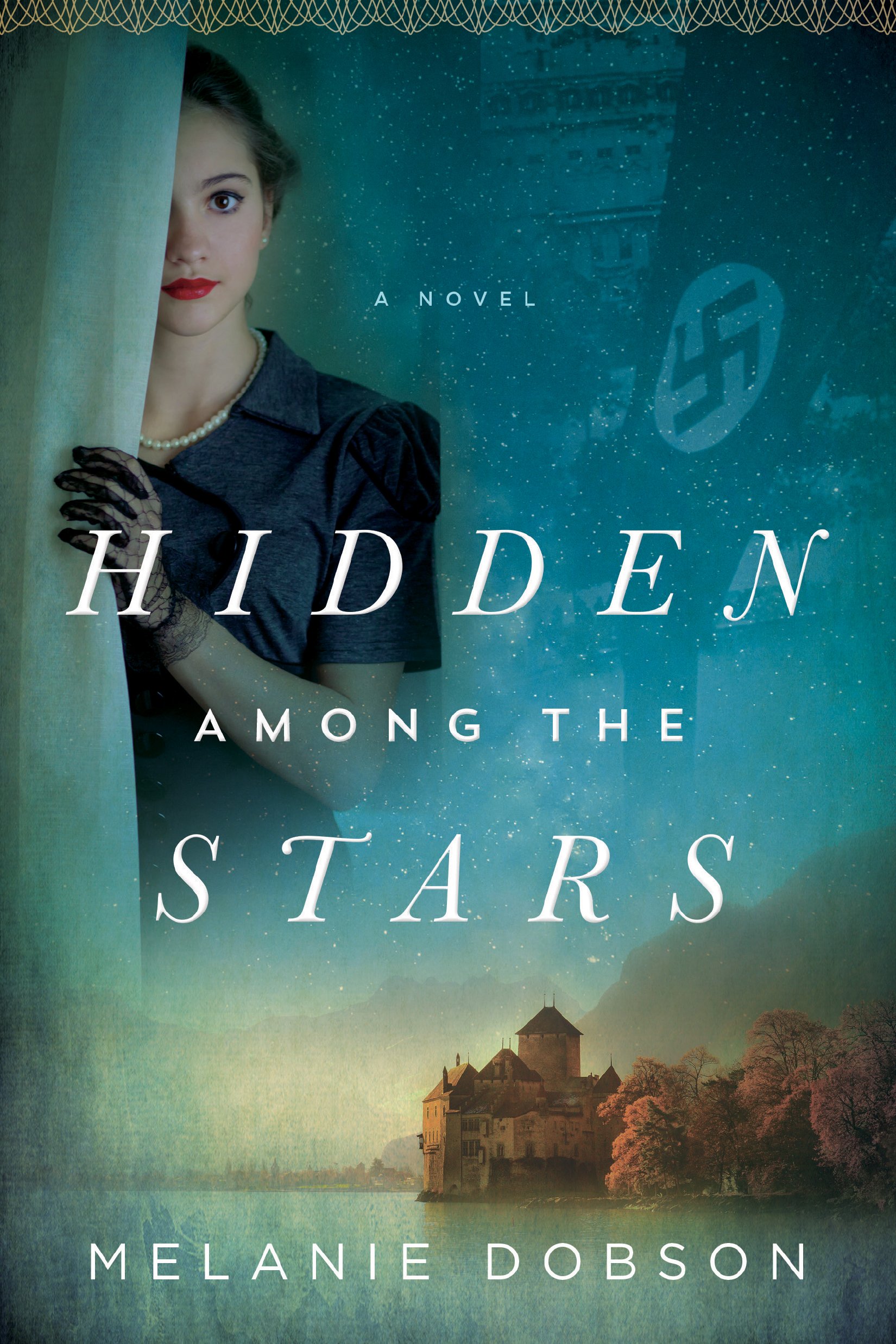
Bookstore co-owner, Callie Randall, has a hobby of reuniting books, and the items left in them, to their original owners. When she comes across an old edition of Bambi, with a cryptic list of valuables handwritten in German within the pages, she is drawn to the mystery of circumstances surrounding the book.

Paralleling the contemporary story, is the 1938 account of the book’s original owner, as the Nazis begin to take over Austria. Max Dornbach and his childhood friend, Annika Knopf, are smuggling the valuables of their Jewish friends, and facing many other challenges in the face of the Nazi regime.

This is a beautiful story, that does not pretend to make everything work out okay. Amid brokenness, loss, and secrets, the characters each have their own interesting journeys, which sometimes converge. The beginning was a bit slow for me, as I tried to grasp both timelines at once; but once I got into it, I couldn’t put it down. Within the many twists and turns of the mystery, there are themes of reuniting the lost, recognizing the love of friends and family, sacrifice, and finding God within it all. It is a well researched historical novel, and I was moved to tears by end of the narrative.

I received a complimentary copy of this book from Tyndale.
Review of Thief of Corinth by Tessa Afshar

Standard

Genre: Historical Fiction/Romance

Recommended.

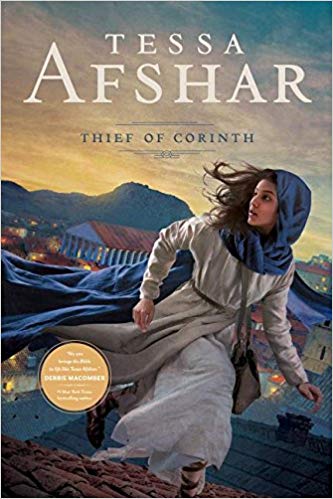
Set in the first century, Ariadne is a strong-willed, athletic young woman, discovering her identity, and grappling with personal responsibility, ethical choices, love, sacrifice, and relationships (especially within her own broken family). She runs away from the oppressive environment of her critical mother, and the arranged-marriage set up by her grandfather, only to find that the freedom of her father’s household is due to his thievery. Ariadne’s natural athleticism makes her the perfect accomplice to her father. But an encounter with the Apostle Paul challenges everything she believes.

Afshar describes her intentions to write “a lighthearted story that still manage to grapple with a few important issues” (373). In this, she has succeeded. Thief of Corinth has a realistic feel that thoroughly encapsulates first century Corinth, while remaining lighthearted and appropriate enough for teen readers.

The story is spread over several years, so it has a slower pace with several peaks, which eventually tie together nicely. I would not consider this suspenseful, but enjoyed the characters, and gentle narrative flow.

I appreciated how authentically and subtly the religious aspects were woven into this novel. I think the story could appeal even to non-religious readers.

Paul’s narrative teaching on love based on 1 Corinthians 13 was particularly touching, although also one of few scenes that brought out more of a contemporary than historical tone. I appreciated this, as the themes in the story are universal. Readers can easily put themselves into the atmosphere of the story, and find personal applications.

I received a complimentary copy of this book from Tyndale.
Review of The Hidden Side by Heidi Chiavaroli

Standard

Genre: Contemporary/Historical Fiction

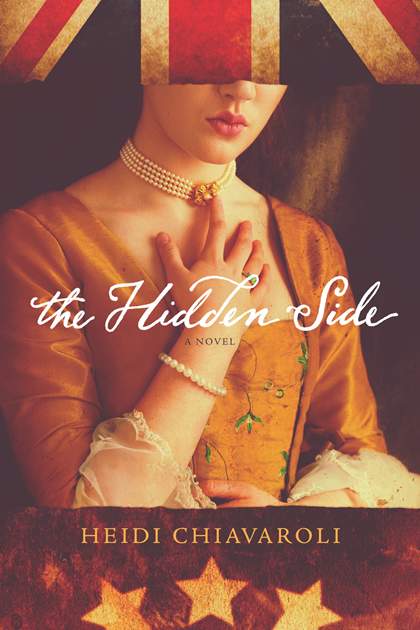
Natalie Abbott hides behind her radio persona, confidently ministering on-air to her listeners, while struggling to connect with her own family. After a tragic school shooting involves her children, Natalie’s world is rocked. She finds comfort in the 1776 journal of Mercy Howard—fiancé to Nathan Hale—who becomes a Revolutionary War spy after her beloved is hanged. The perspectives of Natalie, Natalie’s teenage daughter Maelynn, and Mercy are interchanged as each deals with their own secrets, shame, and journey to freedom.

This is a thoughtful book, but a difficult one to read due to the subject matter. It has a similar feel (not plot) to the controversial drama 13 Reasons Why, with the added aspect of working out one’s faith, and finding grace in the middle of a mess. The characters grapple through dark human issues, repentance and forgiveness, vulnerability, deep secrets, and new beginnings. The parallel historical narrative, while similarly heart-wrenching, provides an interesting depth and perspective, while also breaking up the intensity of the contemporary story.

I appreciate this narrative, but did not enjoy reading it as much as it gave me a lot to think about, and has influenced my perspective on some issues. This is a story that cannot be unread—it will stick with you.

I received a complimentary copy of this book from Tyndale.
Review of Judah's Wife by Angela Hunt

Standard

Genre: Historical Fiction

Series: The Silent Years: A Novel of the Maccabees

Not Recommended.

The silent years is one of my favorite parts of history, and this novel is well researched and descriptive, but didn’t come together for me overall. While I enjoyed the historical details, the narrative was slow and felt unfocused. I struggled to finish reading it (although I’m glad I did as the end was much better than if I were to have stopped half way through).

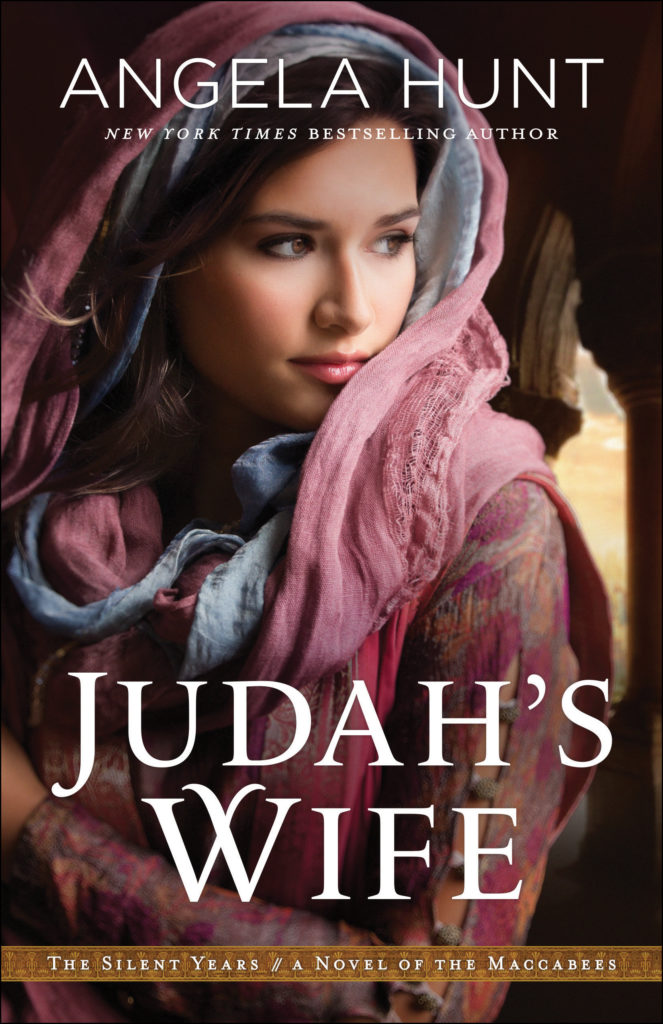
The story is told from the alternating perspectives of Judah Maccabaeus and his (fictitious) wife Leah. Leah’s character is the best developed as she undergoes some interesting shifts, particularly toward the end of the novel. However, Leah’s story and the historic battles felt like competing rather than compatible plot lines. The awkward rhythm of dueling climaxes and resolutions left me disoriented and wanting more cohesiveness between the physical and emotional levels. Meanwhile, Judah lacked the complexity required of his experience. I also wanted a better flow between the light romance of the story (at the beginning) and the seriousness of the grave political climate. Much more could have been developed within this historical setting; but the story came off flat as the emotional plot did not align with the many physical twists and turns. I have enjoyed many of Angela Hunt’s other novels, but did not care for this one.

I received a complimentary copy of this book from Bethany House.

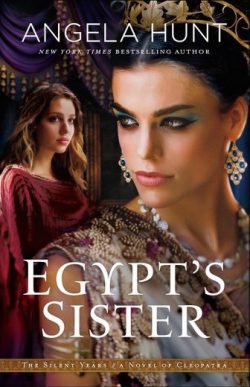
Review of Egypt's Sister by Angela Hunt

Standard

Genre: Historical Fiction

Series: The Silent Years

Highly Recommended!

In Alexandria, Egypt, Chava is a Jewish girl with a close relationship with the young Cleopatra, as her father is the royal tutor for the Ptolemy household. Believing God has destined her to be a blessing to Cleopatra when she becomes queen, Chava chooses not to marry, and seeks to serve Cleopatra at every possibility. However, this choice is more challenging than Chava could have anticipated, as Chava must choose between her faith and her position.

Angela Hunt is one of my favorite writers for Christian historical fiction. The historical details are smartly woven into the narrative, providing vivid insight into the worlds of Egypt and Rome, alongside an adventurous and heart-felt story of friendship, loyalty, godliness, and forgiveness.

This is not so much a story of Cleopatra, as it is of Chava’s sacrificial love for her friend. I love the depth of Chava’s character, and her determination to choose the difficult path of following God, rather than the comfort of marriage. While Chava’s life unravels very differently than she anticipates, God’s promises to her are met in surprising ways. The honesty of the story is encouraging, and well worth the read!

I received a complimentary copy of this book from Bethany House.

Review of The Witnesses by Robert Whitlow

Standard

Genre: Contemporary Fiction/WWII

Not Recommended.

the-witnesses-by-robert-whitlowParker House is a young attorney in North Carolina, with the gift of extraordinary intuition, which often comes in seeing glimpses of the future. His German grandfather, Frank, shares this same gift, which he had used during the Holocaust in regrettable ways. Wartime secrets begin to surface as Parker grapples between progressing his career and finding love, and Frank struggles through deeper issues of faith, repentance, and releasing guilt for his past mistakes.

I enjoyed the legal—courtroom drama—aspects of this book, as well as the characters. I thought Frank and Layla were especially well developed, complex characters; and I loved the flashbacks into Frank’s life during the war.

However, the pace of the narrative was too slow in many places, with the major theme of the supernatural abilities not directly coming out until the middle of the novel.

I also did not like the ending, as I felt the atrocities of the Holocaust (while alive and burdensome in Frank’s mind) were overall downplayed, and not dealt with appropriately or fully. The ending also felt predictable and abrupt to me. I would consider reading this author again, but did not enjoy this book.

I received a complimentary copy of this book from Thomas Nelson.


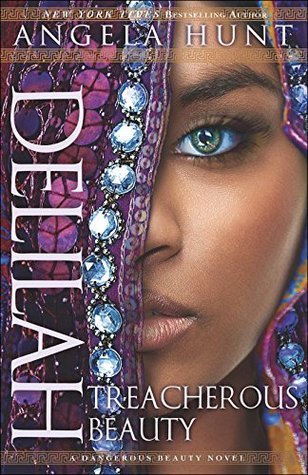
Review of Delilah: Treacherous Beauty by Angela Hunt

Standard

Genre: Biblical Fiction

Series: Dangerous Beauty (Book 3)

Recommended.

delilahI did not love the first two books in the Dangerous Beauty Series (featuring Esther and Bathsheba), but decided to give Hunt another try because I love the concept of biblical women’s stories coming to life, and have appreciated Hunt’s research and unique perspectives in her other books.

Told in the first person from the interchanging voices of Samson and Delilah, this is the best of the series so far. The Bible speaks very little about Delilah beyond her betrayal of Samson’s love. Hunt provides a background for Delilah, and further context for Samson, that is intriguing and realistic without contradicting the biblical account.

I was drawn to the story. I frequently looked back to Scripture while reading to remember whether certain details were truly mentioned (and was surprised by some of the biblical events I had forgotten!). I also thoroughly enjoyed the human perspective of Delilah, who is presented more favorably than in most Sunday school classes.

I received a complimentary copy of this book from Bethany House.

Review of Like a River from Its Course by Kelli Stuart

Standard

Genre: History/Holocaust Fiction

Highly Recommended.

like a riverSet in WWII Ukraine (1941-1945, with the epilogue in 1947), this heart-wrenching story is told from four voices, who are a conglomerate of the hundreds of interviews and stories collected by the author during her extensive research.

Ivan Kyrilovich is a father and husband who risks his life to help his Jewish friends, and ends up in the shooting line with them at Babi Yar. Ivan’s youngest daughter, Maria, finds herself in a concentration camp. Another young Ukrainian woman, Luda Michaelevna, escapes her verbally abusive father, only to experience much worse. And Nazi officer Frederick Herrmann struggles to live up to his prestigious father’s expectations. Other major and minor characters also appear as the lives of the characters intertwine and separate throughout the narrative.

As one would expect from honest Holocaust fiction, not every character has a happy ending. Many scenes are intense and difficult to read. Characters die, and want to die, and experience unimaginable atrocities. Yet the overall feeling at the end is hopeful, and the narrative feels balanced and complete.

This is a powerful, beautifully crafted story, not to be overlooked by lovers of historical fiction.

I received a complimentary copy of this book from Kregel Publications.


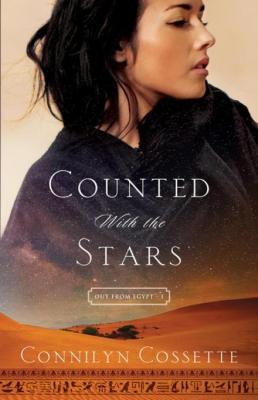
Review of Counted With the Stars by Connilyn Cossette

Standard

Genre: Biblical Fiction/History/Romance

Series: Out of Egypt, Book 1

counted-with-the-stars-by-connilyn-cossette-1441229418Recommended.

Kiya was a wealthy Egyptian, engaged to be married, when her father lost everything—selling her into slavery where she was no longer a good match for her fiancé. In slavery she becomes friends with a Hebrew girl, and experiences the plagues and Exodus from Egypt from the unique worldview of an outsider.

The historical foundation of this fictionalized account is very good; and the perspective is very interesting. The portion of the story when the Hebrews cross the sea, and their time in the wilderness is particularly well done. I was less impressed with the plagues, and found much of the narrative (especially the beginning and very end) to move too slowly, even though the content is solid.

I also could have done without the romance, which felt a bit cliché—although maybe this is what people want? The story could have been stronger by focusing more on the friendship, identity issues, and religious experience of the women without the distraction of finding Kiya a suitable mate.

I loved the fresh perspective of the Exodus, which brought the biblical story to life.

I received a complimentary copy of this book from Bethany House.

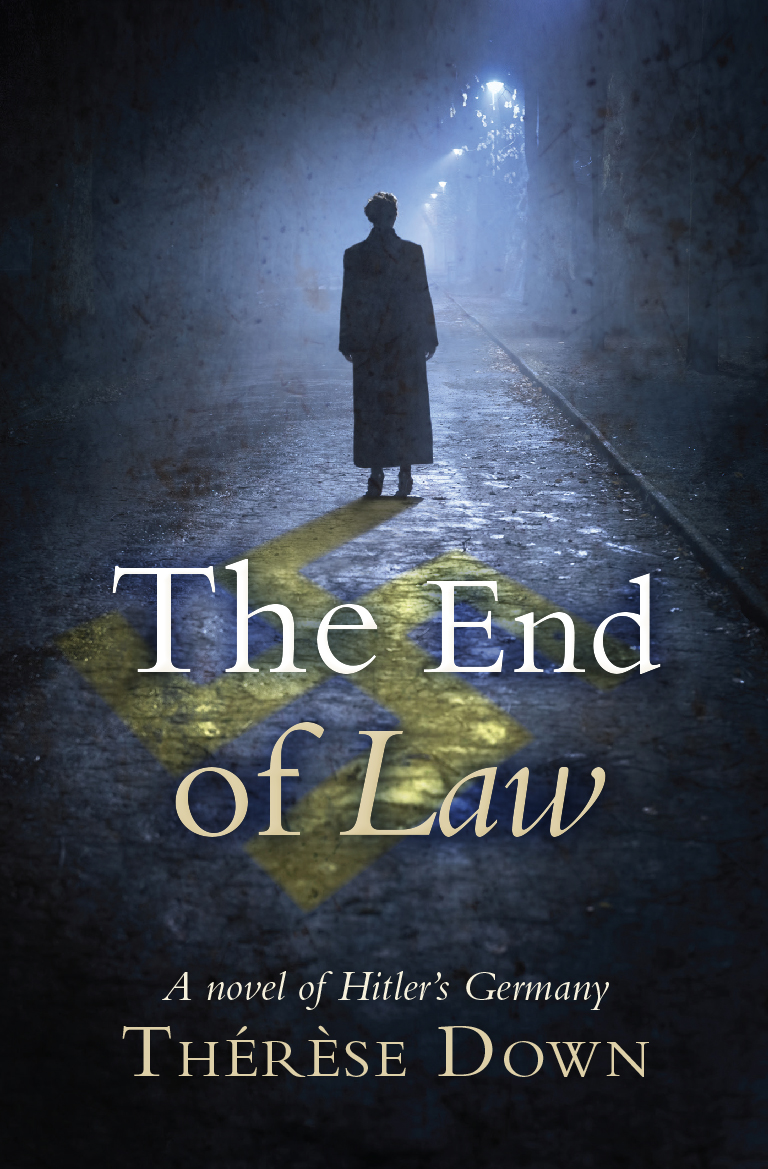
Review of The End of Law: A Novel of Hitler's Germany by Therese Down

Standard

Genre: Historical Fiction/Holocaust

Recommended!

9781782641902

In 1933 Berlin, Hedda Schroeder is wealthy, naive, and caught up in her superficial life of jazz clubs, dating, and fashion. She dates two men: Karl Muller, a medical student and engineer, who bores her; and Walter Gunther, who is attractive, charming, and ambitious in his mysterious work as a newly hired SS officer.

In 1940, Hedda is married with two children to Walter, who is abusive in both his marriage and political work. Hedda also reconnects with Karl, as he and her husband work together as SS officers within the secret T4 euthanasia programme—its mission to kill those unworthy to live, including those with physical and mental illnesses.

This dark, fast moving narrative is informative and powerful in graphically detailing some of the horrors within the T4 euthanasia programme. It captures “adult material” that is not always easy to read, yet very important to remember and take as a warning.

The characters respond differently under the pressure of their circumstances—but each in a very human way. I especially enjoyed Hedda’s transformation from self-absorbed to aware and courageous. I enjoyed the end-note that Karl is loosely based on a real person. And I was challenged to consider the depth of evil, and the ethical and practical responsibilities of those who recognize it.

I received a complimentary copy of this book from Lion Hudson.


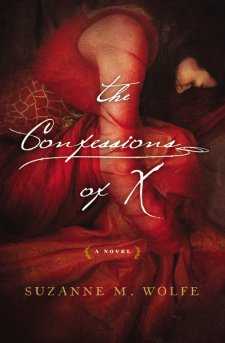
Review of The Confessions of X by Suzanne M. Wolfe

Standard

Genre: Historical Romance

Highly Recommended!

_225_350_Book.1814.coverSt. Augustine of Hippo wrote an autobiographical work called Confessions; and within this he mentions his pain in parting with his concubine, whom he loved dearly. The Confessions of X brings to life a fictitious rendering of this anonymous women’s story—her own autobiography unknown to history, yet having made a permanent impression on Augustine who thus influenced the early Christian world. The historical aspects of the book are well researched, and the author’s minor liberties with the factual account and chronology achieve her goal of dramatic storytelling without taking away from the historical richness.

Truly, this is one of my favorite narratives of the year as the characters touched me—even to tears, which is very rare for me while reading. It is a brilliantly written novel that captures the human condition, and reaches the soul, while also providing a poignant doorway to Northern Africa and Rome in the fourth and early fifth centuries.

Augustine was not a Christian until later in his life, and this is not a “Christian” novel in the tradition of lightheartedness and censoring, but an honest one that tells the truth in every detail: not shying away from pagan worship, sensuality, the brutality of the games, or the pains of childbearing, illness, and loss. The poetic writing evokes the emotions and brings each setting to life—for better and worse, and however graphic to the mind and senses.

I was most touched by the exploration of human and divine love, and was left with a greater sense of Jesus’ love through the multi-faceted metaphor of these characters’ lives, and the impossible choices they make along the way.

I received a complimentary copy of this book from Thomas Nelson.

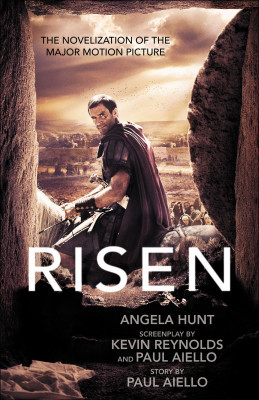
Review of Risen: The Novelization of the Major Motion Picture by Angela Hunt

Standard

Genre: Biblical Fiction

Not Recommended.

COL_BILL_TEMPLATE_17Yeshua’s (Jesus’) resurrection is told through the paralleled perspectives of Roman Tribune, Clavius (who is tasked with overseeing the crucifixion and tracking down Yeshua’s body when it mysteriously goes missing), and a Jewish widow, Rachel, with whom Clavius is having an affair.

Risen starts strong: it is well contextualized within its authentic historical setting (with a couple very minor exceptions), has interesting characters with relatable flaws and struggles, and offers new perspectives of Yeshua’s death and resurrection.

Unfortunately, the emotional development of the main characters is not carried through to the end of the narrative, and toward the end the story fell flat. The final chapters felt like an attempt to fit as much of Scripture as possible into the story, and were awkward to read. I also wanted more development and conclusion of some of the dramatic plot moments leading up to the end. Likewise, I was disappointed by the glaring omission of Yeshua’s ascension into heaven, which is theologically one of the most significant aspects of His resurrection.

I have heard great things about the Risen movie, and understand that the book is quite a bit different—adding characters and content. So while I did not love the book, I am looking forward to seeing the film when I get the chance.

I received a complimentary copy of this book from Bethany House.

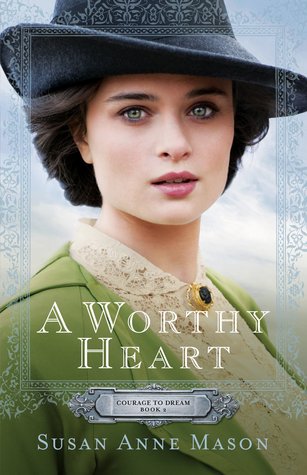
Review of A Worthy Heart by Susan Anne Mason

Standard

Genre: Historical Romance

Series: Courage to Dream, Book 2

Recommended.

25822027This is a double love-story set in New York City in the early 1900s. Maggie Montgomery and her fire-fighter brother Gabe sail from Ireland to America to visit their married brother and his family.

Convict, Adam O’Leary, is freshly out of prison, when he finds himself falling for Maggie—a match that is dissuaded by both families, especially since Maggie has just escaped a bad courtship in Ireland. The woman Gabe has eyes for is a likewise implausible match as she is above his station.

This charming story is a quick read that held my attention all the way through. While the romance is intentionally predictable, there were several surprising twists in the end that made the story more exciting.

Adam’s character was the most developed, and I enjoyed the development of his Christian faith, his struggle to find his place within his family, and his process of embracing forgiveness and new opportunities.

I would not say this is a “deep” story; but it is fun to read, lighthearted, and would go well with a bubblebath.

I did not read the first book in the series [Irish Meadows], and did not feel that I missed anything necessary to enjoying this story.

I received a complimentary copy of this book from Bethany House.

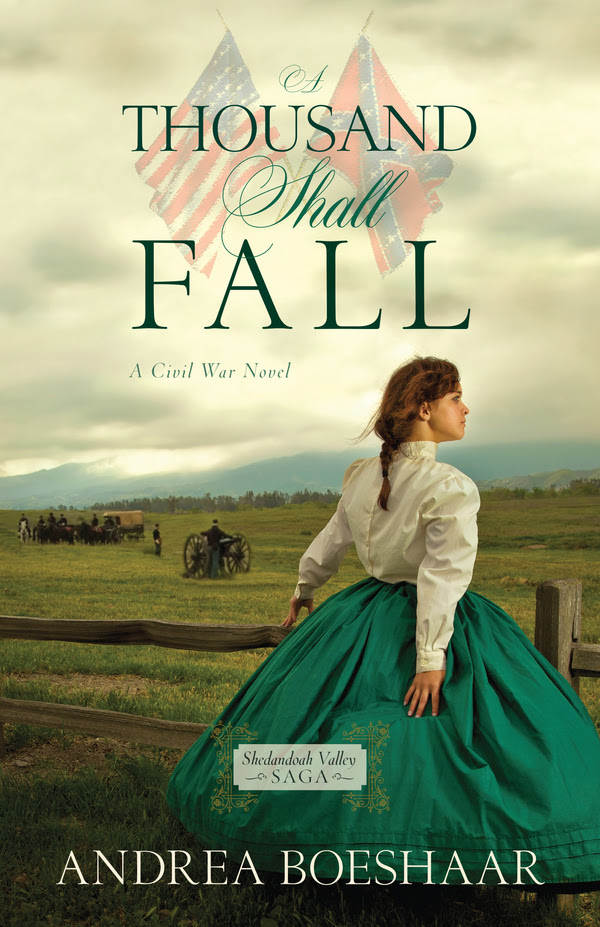
Review of A Thousand Shall Fall: A Civil War Novel by Andrea Boeshaar

Standard

Genre: Historical Romance

Series: Shenandoah Valley Saga

Recommended.

unnamed(3) Set in 1864, a few years into the Civil War, the quick-witted and day-dreamy, Carrie Ann Bell, feels responsible for her family as she carries forth her missing father’s newspaper, and labors at the Wayfarer’s Inn to care for her ill mother and sisters after a fire destroyed their home. So when her younger sister runs away with a peddler, she protectively runs out to find her, disguising herself as a Yankee soldier to look for her in the northern Yankee territory. Unfortunately, she is caught before completing her mission, but sparks fly between her and the Yankee Colonel.

I enjoyed this story, especially for the historical element. I have read very little of the Civil War era, and was able to get a better grasp of who the major militarily and political leaders were on both sides of the war. I also appreciated Boeshaar’s use of authentic historical clippings interspersed throughout the narrative.

The romance was light, fun, and predictable, which is what I expected from this genre. The war aspect (violence, brutality) was also very light and easy to read, despite the many references to horrific events. I am generally drawn toward darker war history, as it seems more authentic in that style. But the historical descriptions, people, and locations, are strong and well researched.
The tone and “appropriateness” of the story make it ideal for teen readers, who would enjoy the story while also learning a bit of relevant history.

Carrie Ann is a charming character, especially for her open-minded intellectual approach to the war, and willingness to consider both sides of the conflict, including the questions of faith and humanity.

I received a complimentary copy of this book from Kregel Publications.

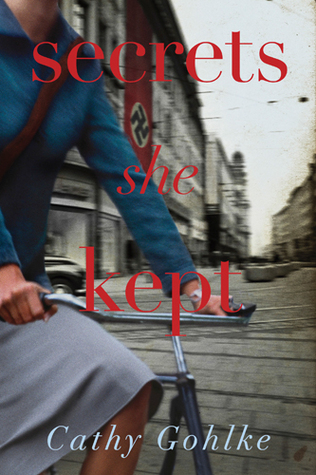
Review of Secrets She Kept by Cathy Gohlke

Standard

Genre: Historical Fiction

Highly Recommended.

25154582Hannah Sterling never had the close relationship with her mother that she desired; but when her mother, Lieselotte, dies, Hannah begins to uncover the war secrets that divided her family and plagued her mother.

Two parallel storylines complement each other in this beautifully written work: Lieselotte’s WWII love-story, and Hannah’s journey to Berlin in the 1970s to visit the grandfather she did not know she had, and uncover her family’s identity.

The romance, history, and complex themes are accentuated by the depth of the characters and film-worthy suspense. The reality of the Shoah can be difficult to remember, yet I did not want to put this one down. Gohlke has crafted a powerful portrait of courage and forgiveness in the face of hatred and darkness.
I received a complimentary copy of this book from Tyndale House Publishers.

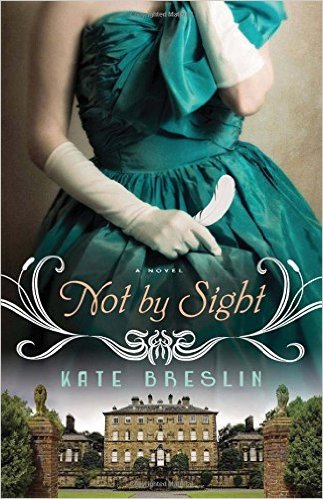
Review of Not by Sight by Kate Breslin

Standard

Genre: Romantic Historical Fiction

Not Recommended.

51wZz3hh67L._SX321_BO1,204,203,200_It’s 1917, and wealthy British suffragette, Grace Mabry, desires to help her country’s WWI efforts in any way she can in order to bring her brother home from the trenches of France safely. At a costume ball she hands a feather of cowardice to Jack Benningham, heir to the Earl of Stonebrooke—a man she believes should be fighting for his country rather than attending balls and absorbing female attention. But Jack has secrets of his own, and is involved in a circle of espionage. As their paths cross again, they are each forced to confront true courage, vulnerability, and the romantic feelings budding between them despite him being engaged to another.

I chose to read this book based on the stunning cover art of the mysterious woman in a brilliant green dress. The mystery and enchantment of the cover, unfortunately, did not translate for me into the narrative. This is a cute, light-hearted story, but it progressed too slowly for me, and without real depth. There are some twists—the backbone of the story is good—but it was not written in a way that created much suspense or mystery. I easily anticipated what would happen based on the direct character cues and details. I also did not love the characters, and would have liked more historical detail.

I received a complimentary copy of this book from Bethany House.

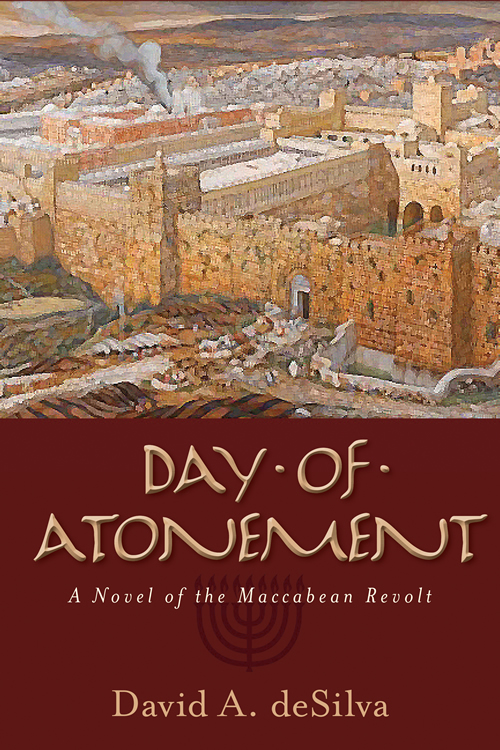
Review of Day of Atonement: A Novel of the Maccabean Revolt by David A. deSilva

Standard

Genre: Historical Fiction

Recommended.

9780825424717The intertestamental period is one of my favorites to study, and one that has continued to be mysterious to me. David deSilva has done an excellent job of fictionalizing many of the historical forerunners in a well researched look at the tensions between the Torah-abiding Jewish community and ever expanding Hellenistic world.

There were some slow moments—especially in the beginning as so many characters were introduced so quickly. But once I had the characters and their motivations straight (some of which I was already somewhat familiar with from history, and many others that were completely new to me), the story began to escalate quickly. This is one that gets better as it goes along, and it was well worth pushing through some of the earlier slower moments.

I have a clearer understanding of the Maccabean revolt and the tensions of assimilation after reading this. The thematic issues are also germane for our world today as Christians, Jews, and other religious groups struggle to preserve the important aspects of their identities within an expanding secular world. The dialog at times seemed almost more Christian and/or contemporary Jewish than of the intertestamental time period, but this was not a negative point for me as it emphasized the contemporary relevance and gave me even more to think about. It is not so much light fiction, as it is historically dense, so I recommend this to lovers of history.

I received a complimentary copy of this book from Kregel Publications.

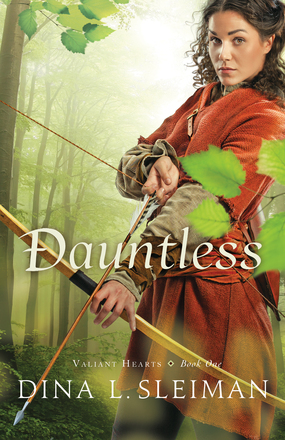
Review of Dauntless by Dina L. Sleiman

Standard

Genre: Juvenile Fiction/Historical Romance

Series: Valiant Hearts, Book One

Not Recommended.

dauntlessMerry Ellison was raised as the daughter of a Baron, but now she is the fearless leader of “The Ghosts of Farthingale Forest”—a group of bandit children who have been outlawed due to their parents’ crimes, and who now survive in the forest by stealing from the wealthy. Before going into hiding, Merry had been engaged to Timothy Grey, who now works as an assistant to the local earl, in service to the King. When their lives re-connect, they must each decide where their loyalties lie, and allow God to direct their futures.

I took a class on the mythology of Robin Hood as an undergraduate, and read tale after tale of various legends written mostly in Middle English and/or Early Modern English, so the idea of this kind of story was really interesting to me, especially with a strong female lead and Christian perspective.

I felt like the narrative was missing the expected edge. I cannot explain my disconnect, except that the tone seemed off. Merry seemed a bit soft, and too emotionally driven. I did not like the love triangle, which I felt was cheesy, distracting, and put Merry’s focus too much on romance and not enough on her strong female identity (not that strong females are not also emotional and romantic, but that there should be more depth in addition to those elements). I also struggled to connect with the characters in general.

The theology was also interesting. The question comes up regarding whether stealing and violence are sins, or to be precedented in certain situations. The novel presents the latter, but I was a bit uncomfortable with this considering the young adult audience. I did like the second theological message that God is always with us, even when we are not with Him.

This is a story with lots of potential, but it did not come together for me as well as I would have liked. I do hope there will be more Christian stories written within this genre and time period.

I received a complimentary copy of this book from Bethany House.

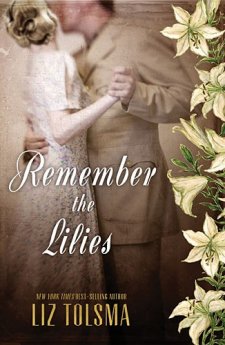
Review of Remember the Lilies by Liz Tolsma

Standard

Genre: Romantic Historical Fiction

Recommended.

_225_350_Book.1507.coverAfter reading Liz Tolsma’s previous two WWII fictions, I had been looking forward to this one, and was not disappointed.

This one is set in the Santo Tomas Internment Camp in Manila, Philippines under the rule of the Japanese. Rand Sterling was a wealthy American club owner, but now is in the camp along with everyone else. Irene Reynolds was raised by her aunt doing missionary work in the Philippine jungle, and works in the camp retyping the letters that had been censored by the Japanese. When Irene recognizes that a letter to Rand is warning him not to escape, she rushes off to find and warn him, thus beginning an interesting relationship between an unlikely match.

I connected really well to the characters, and learned so much about the nature and economics of the Japanese internment camps. Tolsma has done her research, and was inspired by an interview she had with a survivor of Santo Tomas Interment Camp, who was there as a child. The themes of honesty, vulnerability, and forgiveness also touched me as the characters learned to be open and merciful to the people in their lives, whether close friends or enemies. And I was most inspired as the characters held onto their hope until the end of the war, as I am also walking through a difficult season with my health.

The narrative covers so much time: from Oct. 1943 (though starting with an earlier, Dec. 1941, prologue) through Feb. 1945. There were a couple places where the transitions were a little choppy (although it was also really great to see the effects of the camp over this longer timeline). There were also a few places were the spiritual themes felt a bit awkward. Even with these few bumps here and there, it was a meaningful and educational narrative for me, and one I would recommend to lover’s of historical fiction.

I received a complimentary copy of this book from Thomas Nelson.

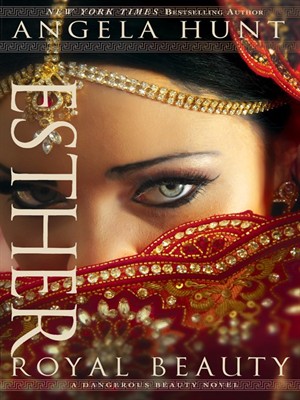
Review of Esther: Royal Beauty by Angela Hunt

Standard

Genre: Historical/Biblical Fiction

Series: Dangerous Beauty{DD3AF05F-C83B-4AE2-A5DA-BAE50C39EA2D}Img400

Recommended.

Happy Purim! Esther is one of my very favorite biblical heroines, so I’ve read several fictional renditions of her story. Angela Hunt provides a fresh look at the book of Esther. This unique narrative creatively pulls together one potential historical scenario, beginning with a young teenaged Hadassah, and sharing details beyond the biblical record based on the author’s research (especially of the Greek historian Herodotus).

I did not love Hadassah’s character in the opening chapters: she is immature and annoying, focused on girlish fantasies of living in the wealth of the palace as a lover of the King, and as one assimilated into the Persian culture. I set the book down after only a couple chapters because I was having trouble getting into it. But when I resumed reading, I began to quickly engage in the story. Esther soon becomes a very likeable queen, and the transformation in her persona makes her more relatable, and emphasizes God’s work in her.

I also enjoyed the dual perspective that this narrative is written from: half from the perspective of Hadassah, interspersed with chapters from the perspective of one of the King’s eunuchs, Harbonah. Almost all of the story is “new” and from a unique and interesting viewpoint, so the details stood out and caused me to think beyond the story to consider the characters (especially the motivations of the King) in a new light. I found it a particularly interesting twist that Esther desired the company and affections of the King, since I’ve typically heard the story differently—but realized that if God gives us the desires of our hearts, why not also give Hadassah the desire to fulfill her calling as the Persian Queen?

This was enjoyable to read, would be interesting to discuss in a group setting, and—because it did not have a strong message beyond painting the historical picture—has the open-ended gift of speaking to different people in different ways.

I received a complimentary copy of this book from Bethany House.

Review of The Secret of Pembrooke Park by Julie Klassen

Standard

Genre: Historical Fiction/Mystery/Romance

Recommended!

pembrookeAbigail Foster is practical, intelligent, and worried she may end up a spinster when the man she has admired since their childhood seems to have eyes for her younger, prettier sister instead.

When a bad investment forces her family to look for a more affordable living arrangement, an interesting opportunity arises for them to rent Pembrooke Park. The manor has been abandoned for many years, and is rumored to be haunted and to hold treasure in a secret room.

The narrative twists and turns through mysterious happenings and suspense, love triangles, strange neighbors, long lost family members, formal parties, hidden secrets, and a very real treasure. The story and characters are so engaging, I hardly noticed the 450 page length as I read through it quickly.

There is a direct faith based message, which I felt was slightly awkward toward the end as Abigail seemed to jump from non-practicing Christian to preaching Christian without enough spiritual build-up. Even so, the message is a good one. It’s not overdone, but could just use a better transition, and the strength of the overall narrative makes up for it. The complex mystery is fun to read, especially as it becomes a meaningful illustration of faith and God’s love.

I received a complimentary copy of this book from Bethany House.

Review of The Heretic by Henry Vyner-Brooks

Standard

Genre: Historical Fiction

Not Recommended.

51YWlLfuhIL._SY344_BO1,204,203,200_The Heretic takes place in Reformation England from 1536 to 1539. There are many layers to the story. The two main groups of characters are a monk, Pacificus (who is actually a disguised knight, Sir Hugh Erpingham, and has interactions within both his personas), and a family of “heretics” who are persecuted for believing and practicing outside the official church (becoming an “extended family” as the children are sent to live with a family of Anabaptists while the parents are charged). There are also some recognizable historical figures.

I have only basic knowledge of this time period, so I was hoping this novel would help me to learn a bit of history in an enjoyable way. I did feel as if I could envision the scenery and setting, but otherwise I had trouble following the overarching historical-political events. I would summarize that the writing is historically very strong, but only to those who are already familiar with the period.

The story is good, but also very slow (603 pages, covering a span of years). It is overly thorough in some areas, while neglecting to fully connect the dots of the historical picture in other places. I was interested just enough to keep reading, but not enough to truly engage in the story. I would have liked either much more action and suspense (there is some suspense in the plot, but not in the style of writing), or a stronger emotional pull to the characters—or both!

There were also a couple very gruesome scenes that were much too graphic for me, though aptly reflecting the spirit of the times.

I received a complimentary copy of this book from Lion Fiction.

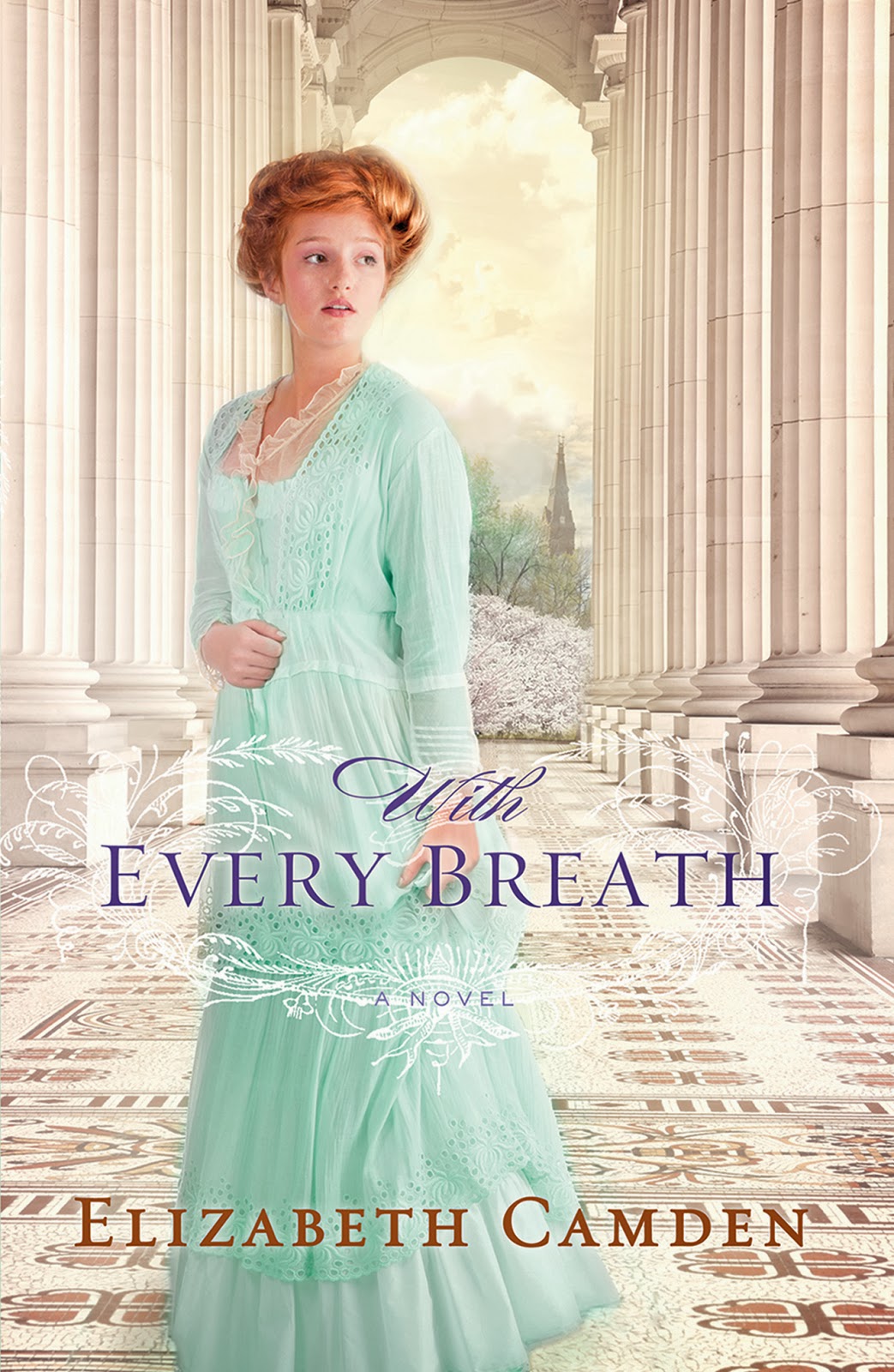
Review of With Every Breath by Elizabeth Camden

Standard

Genre: Historical Romance

Recommended.

with every breath

Set in the late 1800s in Washington, D.C., Kate Livingston and Trevor McDonough had always been school-mate adversaries. Now as adults, Trevor has become a distinguished physician, while Kate (having lost the scholarship that was her only chance at college to Trevor) is struggling in a career that neither challenges or interests her.

When Trevor unexpectedly pursues Elizabeth to work alongside him in his research to cure tuberculosis, she jumps at the challenge, and their wit and competitiveness merge in an amusing chemistry. As their research is threatened by a reckless and anonymous “insider,” Kate is certain that Trevor’s mysterious past has something to do with their endangerment.

I loved reading this. Kate is a fiery, intellectual, strong-willed woman (not represented well by the cover picture); and Trevor is a private, equally strong-willed, introvert, gifted in his brilliance to perfect the world. The story’s depth and dynamic comes through as they each come to terms with their emotions and past wounds (especially with experiencing the death and illness of loved ones in their individual lives).

While faith is a more subtle piece of the story, the theme that love is tested in fire, and is not to be reserved just when circumstances are easy really stood out to me. I also appreciated the historical detail, fascinating period-appropriate medical information, and the compelling mystery.

I received a complimentary copy of this book from Bethany House.

Review of A Match of Wits by Jen Turano

Standard

Genre: Romantic Historical Comedy

Series: Ladies of Distinction, Book #4

Not Recommended.

Set in 1883, Agatha is a quick-witted news reporter who naturally attracts dangerous and troublesome situations. (She reminds me just a bit of Amelia Bedelia from the popular children’s book series.) When Agatha unexpectedly reconnects with Zayne—a single and handsome man from her past—sparks fly in a match of their equally stubborn natures and evident chemistry.

This novel is simply not my taste. I was intrigued by the book description, unsure about the cover, and plunged into it anyway, only to decide I had made a poor choice for myself.

I still cannot decide exactly why the narrative rubbed me the wrong way because the writing is solid. I think the comedic aspect was just too much for me: over the top, with larger than life characters that were unsettling and even annoying to me. I personally found it difficult to connect with the characters, story, and not-my-style humor; and I had trouble feeling the essence of the historical period.

That said, the story does begin to improve toward the middle as the character and plot focus becomes more settled and concentrated. I imagine readers who are looking for an exaggerated, light-hearted, and cheesy sort of romance and humor would likely enjoy this, even though it was not suitable for my taste.

I received a complimentary copy of this book from Bethany House.

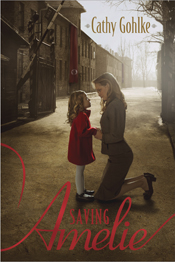
Review of Saving Amelie by Cathy Gohlke

Standard

Genre: Historical Romance

Recommended!

This is one of the most interesting Holocaust novels I have read, focusing on the variations of insider German attitudes from August of 1939 through the summer of 1940 with a post-war epilogue.

Rachel Kramer is the daughter of a prominent (fictitious) American doctor of eugenics, who works closely with the infamous German Drs. Mengele and Verschuer. As she accompanies her father on a business trip, she is shocked to discover—largely through an American journalist—the implications of her father’s research, and the personal web of heartache and disillusionment it has created within her own family. When her childhood friend comes to her for help in rescuing her deaf daughter Amelie from certain death due to the scourge she is upon her SS father’s Aryan bloodline, Rachel chooses to leave her life of privilege to go into hiding with the child, eventually finding shelter in the Bavarian village of Oberammergau, famous for its Passion Play.

The Christian theologian, Dietrich Bonhoeffer, and his message of the cost of grace, also plays a substantial secondary role as the characters determine for themselves who they are, what they believe, and how they should live in response to the increasingly difficult circumstances.

There are quite a few monumental transitions within the story, which at times made the novel feel long-winded, or like a trilogy wrapped into one. I was caught up in the characters, and the thoughts the story-line provoked within myself, yet also felt emotionally and intellectually pulled to shift my emotional response as the narrative went along. There could have been more cohesion within the emotional and spiritual motifs to tie the whole together as the beginning and ending felt like completely different pieces despite the natural flow of the plot-line in between. Nonetheless, this was an enjoyable and fascinating glimpse into this time-period, and a call to evaluate our modern culture in order to avert similar potential atrocities.

I received a complimentary copy of this book from Tyndale House Publishers.

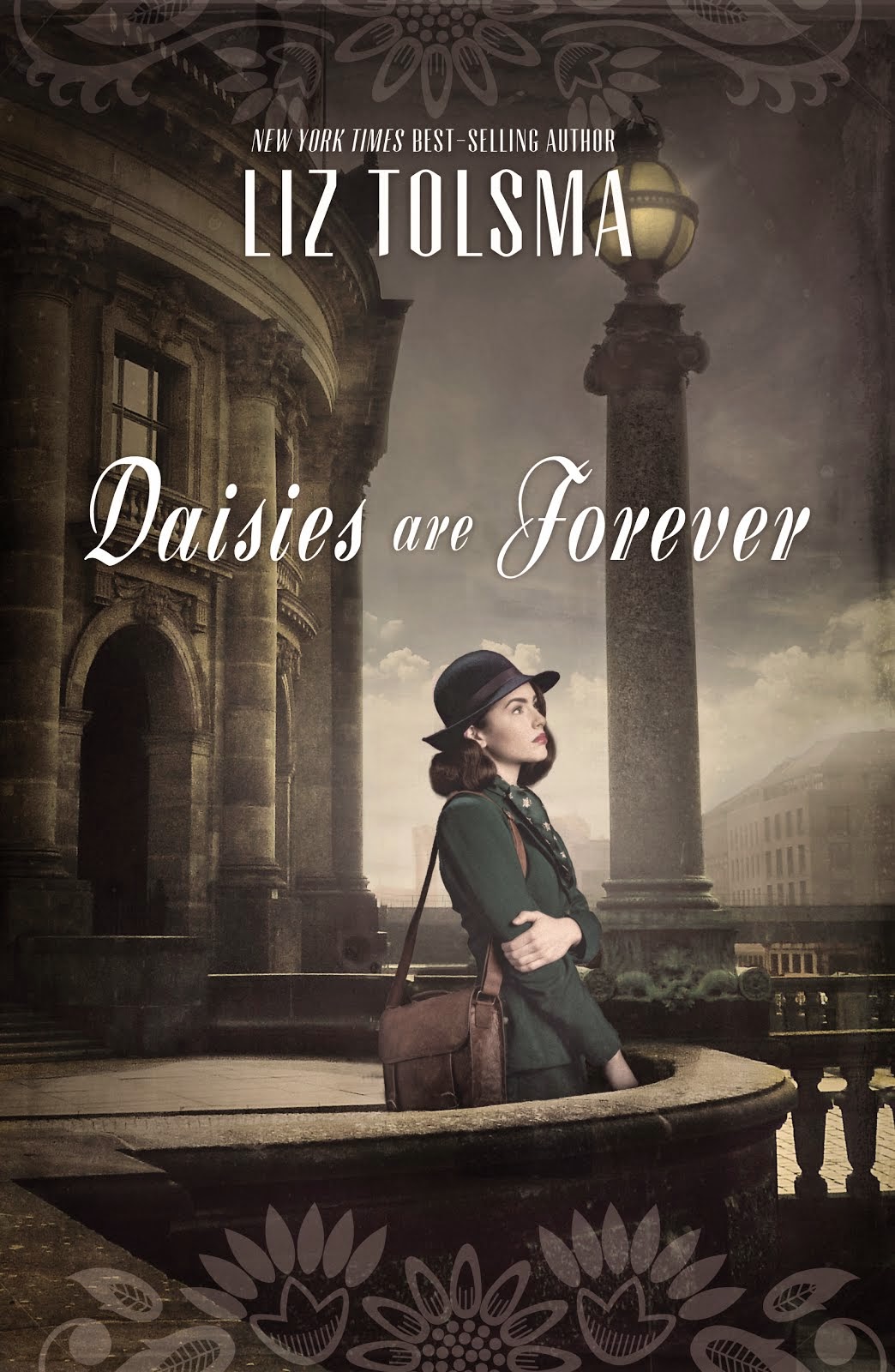
Review of Daisies are Forever by Liz Tolsma

Standard

Genre: Historical Romance

Recommended.

Tolsma’s writing is vivid and powerful. I loved her previous novel, Snow on the Tulips, and enjoyed this one as well. I especially appreciate that this was inspired by two separate true accounts, and that it presented a unique perspective of the normal German citizens who were also impacted by this dark period of history.

German-American Gisela is in East Prussia visiting family when the Soviet army begins to invade. Her cousin, Ella, urges Gisela to flee with her (Ella’s) two young girls, while she stays behind to nurse their sick grandpa. Gisela heads to Berlin, hoping to also collect her mutti before traveling south to safety. On the way she encounters a British POW escapee, and pretends to be married to him in order to save his life. As their group grows, they seek every option to survive the attack of the Russians, British, and American armies, praying the war will be over soon.

The story is true to history: touching on the violence, open hangings of the “cowardly,” gruesomeness, sexual assault, hunger, emotional struggles, and other horrors of living in a war zone. Yet it is also a lighthearted romance with the subtle spiritual motifs of trusting God in the midst of chaos and heart-wrenching loss, forgiving ourselves, and allowing God to bring healing to our deepest pains and regrets.

For the most part I connected really well to the characters—two of the secondary characters (Kurt and Audra) were mildly annoying to me at times, though not so much that it caused me to like the book any less—but I engaged well with Gisela, and particularly enjoyed the humor added by two elderly, senile, traveling companions. I also felt that the story concluded a bit suddenly in terms of the physical war plot, although the “feel good” epilogue wrapped up the emotional story nicely.

I received a complimentary copy of this book from Thomas Nelson.

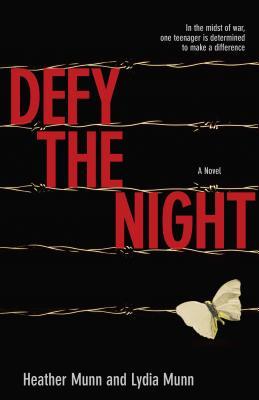
Review of Defy the Night by Heather Munn and Lydia Munn

Standard

Genre: Historical Fiction

Series: Book Two

Recommended.

France; 1941. Fifteen year old Magali is living in the “free” zone of Southern France under Vichy rule, and is naive to the dangers and seriousness of the war around her, even though the worst is yet to come. When she is given the opportunity to help rescue children from internment camps and into charity homes through a Protestant refugee organization, she jumps at the chance to be a hero; but her pride and immaturity become a risk to those around her. Magali must learn to become secure and humble in her own calling, to put love first, and not to neglect the value of her friends and associates.

This is an excellently written story filled with depth and well-researched history. The characters are vibrant, and their emotional journeys are raw and honest. Magali, especially, has so much heart and passion, which is often misdirected and careless—but it is a joy to also watch her “come to age” through her mistakes and experiences. As I read her story, I couldn’t help but remember some of my own immature moments, and to praise God for guiding me through them.

This is the sort of book I would love my children to read as part of our homeschool curriculum when they reach their teens. It is not only an enjoyable story, but one which is informative, based on true accounts, and which provides the perfect backdrop for teaching and dialog about the progression of WWII, and the Christian responsibility for dealing appropriately with difficult and unjust circumstances.

Defy the Night is also part of a series, but each book is independent, despite some overlap in characters. The first book, How Huge the Night, is the coming of age story of Magali’s older brother Julien, and takes place in the first years of the war. The authors also have plans for a third book, which will likely include even more action as the war itself intensifies!

I received a complimentary copy of this book from Kregel Publications.

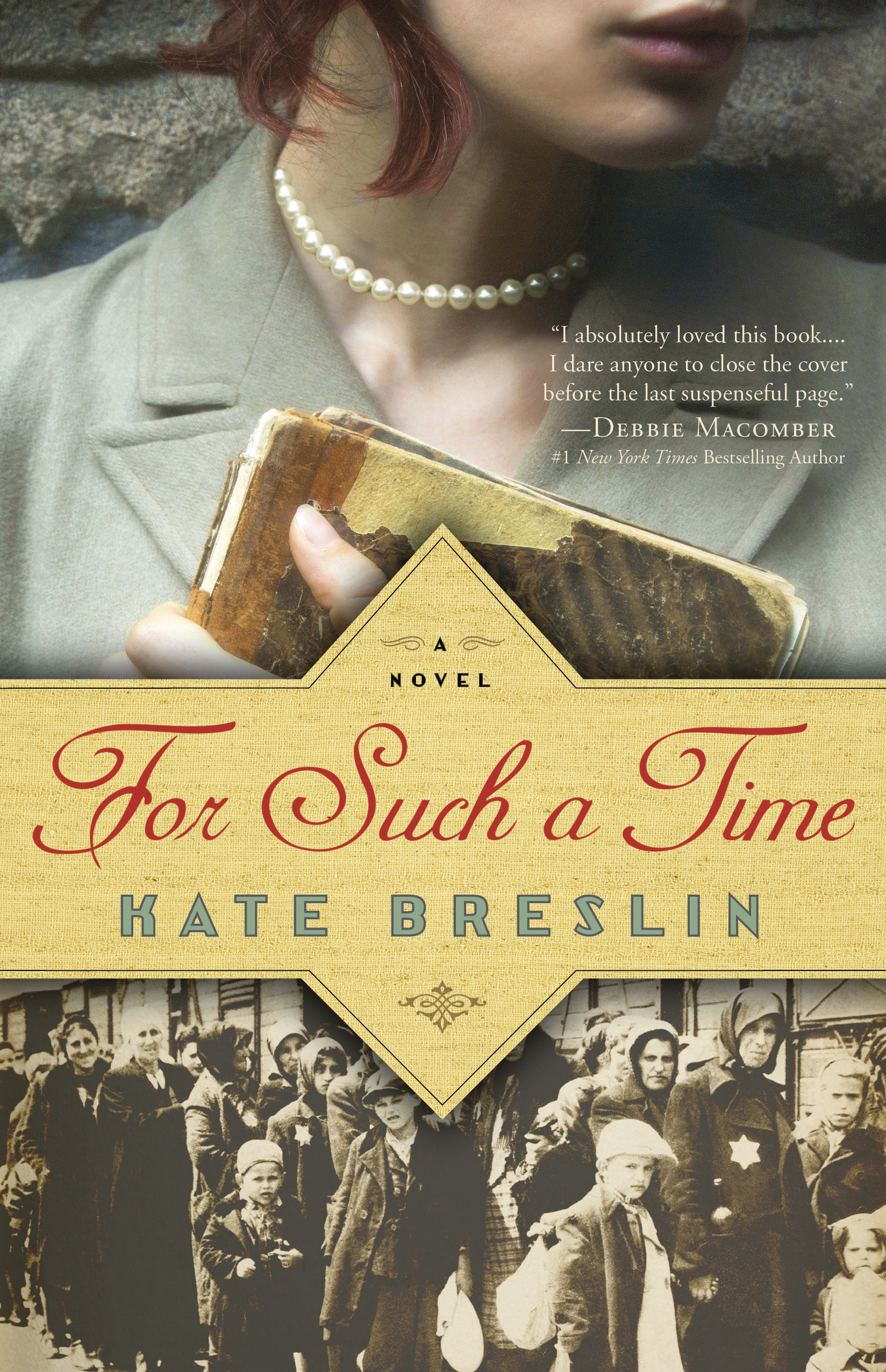
Review of For Such a Time by Kate Breslin

Standard

Genre: Historical Romance

Recommended.

For Such a Time is a unique retelling of Esther based during the Holocaust. Hadassah Benjamin (hiding under false paperwork as Stella Muller) is rescued from a shooting line and finds herself in the odd position of working as a secretary for SS Kommandant Colonel Aric von Schmidt while her fellow Jews (including her uncle Morty) endure the harsh conditions of the Czechoslovakian transit camp, Theresienstadt, that borders her new “home.” Worse, her people are progressively being transported to Auschwitz, and she is ordered to type up the lists of names finalizing their transportation and certain death—all while hiding her true identity, struggling with her faith, and feeling that God has abandoned them.

I enjoy how this narrative finds freedom in expressing the heart of the Esther story outside of its traditional setting. The events, especially in the climax and finale, unravel creatively, so as to bring fresh insight to the original.

There is a bit of awkwardness surrounding the romance between Stella and Herr Kommandant—but perhaps this was true of Esther and the Persian King as well within their married relationship? I would have liked more attention to have been given to Aric’s faith and feelings, which were alluded to on many occasions, but never explored to the extent of Hadassah’s. I also felt there was too much emphasis placed on Stella as the savior of her people (rather than an emphasis on the recognition of God at work); and also too quick of a spiritual spiritual resolution for Stella’s own question of faith.

That said, the book does well at its intentions to entertain, bring freshness to a beloved biblical account, and to reveal and remember the horrors of the Holocaust and God’s faithful presence even in our most difficult hours. This is also a wonderful debut novel to start off Breslin’s endeavor into historical fiction.

I received a complimentary copy of this book from Bethany House.

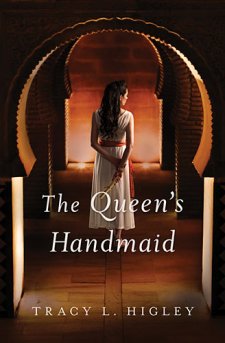
Review of The Queen's Handmaid by Tracy L. Higley

Standard

Genre: Historical Fiction

Recommended!

An orphan from birth, Lydia is raised in Cleopatra’s palace, and becomes the personal handmaiden to her son, Caesarion (Ptolemy Caesar, son of Julius Caesar). She is also trained in the ways of the God of Israel by her Jewish father-figure, Samuel, an old man who also works in the service of Cleopatra. When Samuel is killed, Lydia is left with a mission larger than herself—to deliver the ancient scroll of Daniel to the Chakkyim (Aramaic for “Wise Men”). In order to fulfill Samuel’s last directive to her, she becomes a handmaiden to Herod’s wife Mariamme I, where she finds danger, adventure, romance, and discovers her true identity in more ways than one.

The novel begins in 39 BC and spans several years, locations, and people, particularly expanding on the relationships between Egypt (Cleopatra), Rome (Marc Antony), the Idumeans (Herod and his family), the Hasmonean Jews (especially Mariamme and her brother Octavian, who became called “Augustus Caesar”), and the Jewish Zealots. I am not too familiar with this period, and enjoyed learning along with the story, which follows the historical account pretty closely.

There were a few chapters where the years and locations changed in a way that was easy enough to follow chronologically, but more difficult to connect to the characters because of the quick transitions. It may have helped to simply introduce the date and location within the chapter header as the first chapter had done, so that the reader is emotionally prepared for the new setting rather than caught off guard as the chapter unfolds. As I was reading these few chapters, I began to consider that maybe I did not like the book much after all, because it began to feel too plot-focused, and I was struggling to stay connected to the characters as I tried to piece together the events.

I am so glad I kept reading! The story picks up as the physical setting and time became more settled, and the characters’ personalities began to resolve in a dramatic way. The last half of the reading was everything I enjoy in a novel: a thorough historical backdrop, deep character tensions and personalities, mystery, action, and romance—and there was even a bit of realistic “charismatic” spiritual action between the sorcery of one of the characters and the power of God emanating fluidly through His servant, Lydia.

I have read and enjoyed a handful of Higley’s books, and appreciate the extra research that went into making this one especially memorable. It is one I will likely read again.

I received a complimentary copy of this book from Thomas Nelson.

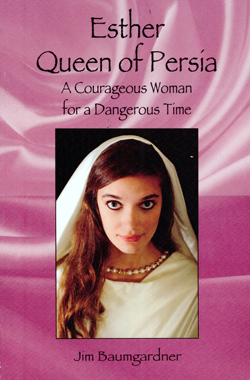
Review of Esther Queen of Persia: A Courageous Woman for a Dangerous Time by Jim Baumgardner

Standard

Genre: Historical Fiction

Recommended.

Finally, an Esther narrative that is intentionally true to the historical account! This book is well researched, and the biblical gaps are realistically portrayed to correspond with the foundation of Scripture.

It took me a couple chapters to fully engage with the characters, but then I was captivated. Esther is wonderfully presented as a humble and intelligent young woman in addition to her outward beauty. I wondered if a male author could adequately present the emotions behind her situation—being forced to throw away her dreams of a Jewish marriage to unite with a king who has so many other wives and concubines and who could have even rejected her after just one night of sexual intimacy. Baumgardner’s depth into Esther’s character, however, is right on the mark. It is a heart-wrenching story that delves far beneath the surface into the complex identity of Hadassah/Esther.

I will say, I don’t think the book’s cover fully expresses the depth of its content. The cover illustration of Esther is beautiful, but I think would be better presented over a full-sized scene of Shushan with Esther in the foreground—comparing her humility with the pagan extravagance of the Persian empire. The writing itself presents this context well. It is hard not to feel for Esther’s situation, and to marvel at her response in the midst of a difficult time.

I was also a little thrown off by an embellishment at the end with integrating the battle techniques of the Chinese. While this addition is historically possible, I thought it distracted from the fluidity of the story, and its focus on the faithful and dependable God of Israel.

Even so, this is the best fictional rendition of Esther I have read thus far. I really enjoyed the historical detail to the 5th century B.C. world, the well-developed characters, and the integration of the Scriptures—not just from the Book of Esther, but from many other books of the Tanakh (OT) that the characters would have been familiar with as an oral foundation for God.

I received a complimentary copy of this book from the author, Jim Baumgardner, for the purpose of providing an honest review.

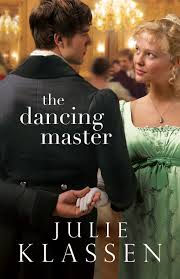
Review of The Dancing Master by Julie Klassen

Standard

Genre: Historical Romance

Recommended.

London dancing master Alec Valcourt is forced to relocate his family and business in the aftermath of a scandal. He moves his mother, sister, and himself into his uncle’s rural, small-town residence of Beaworthy, Devonshire, England. But he soon learns that dancing has been prohibited in the town, and that his appearance and occupation has stirred a deep-set wound. Mrs. Amelia Midwinter, the matriarch and local beneficiary responsible for the taboo on dancing, must deal with her personal wounds most of all—especially as her daughter, Miss Julia, and the new dancing master begin to develop a growing fondness toward each other.

The story is reminiscent of Footloose, yet set in the charming English historical landscape of the early 1800s. At times the drama is almost “soap-opera-ish” as the character’s deal with deep feelings amongst the uncovering of long-past scandals and deep secrets. But there is also a lightness to the writing as God’s grace and love become mending threads, bringing healing, reconciliation, and fresh identity in replace of the painful memories and present conflicts.

This is the first of Klassen’s novels that I have read, and I particularly like her writing, historical detail, and the depth of the characters’ emotions. However, I would have liked a bit more depth into the stories of some of the supplementing characters (a couple of whom I favored over the primary protagonists). Also, the pace of the narrative overall could have been a bit quicker/smoother. That said, I am nevertheless curious to read Klassen’s other historical novels, and found this to be an enjoyable and relaxing read.

I received a complimentary copy of this book from Bethany House.

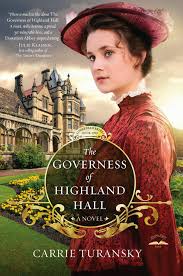
Review of The Governess of Highland Hall by Carrie Turansky

Standard

Genre: Romantic Historical Fiction

Series: Book One of the Edwardian Brides Series

Recommended.

Julia Foster was a missionary in India until her father’s sickness brought the family home to England, requiring her to find work as a governess to financially support herself and her parents. At Highland Hall, Julia quickly becomes like part of the family, catching the eye of the estate’s master, Sir William Ramsey, as she attends to the children. Meanwhile, Ramsey struggles to save the estate from financial ruin.

The front-cover praise of best-selling author Julie Klassen compares this novel to Downton Abbey, and I fully agree with this assessment. I am not a super fan of Downton Abbey—I watched and enjoyed the first couple seasons, but have not recently been following the show. The Governess of Highland Hall is more engaging to me than Downton because the pace is a bit faster, and the characters are lovely. Turansky’s writing is vivid. The story is predictable, but so sweet and delightful that it is a joy to read. The Edwardian era is also captured particularly well.

Moreover, faith is (appropriately) a large part of this narrative, as is the tension between social classes. There are definite moral and religious themes presented throughout, and while they are direct, I liked how the story enveloped these seamlessly. Julia’s faith, especially, is a guiding element within her personality and decisions; it is the Christian faith in comparison to the materialism and class separation of the period that brings life to these characters.

I do think the ending could have been written a bit more powerfully. And, since this novel is complete within itself, I would have also enjoyed a clue to what the next in the series will offer. I am not left with any suspense toward the narratives to come, even though I thoroughly enjoyed the lightheartedness of this one.

I received a complimentary copy of this book from WaterBrook Multnomah.

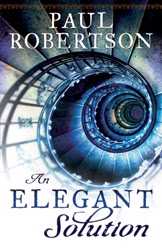
Review of The Elegant Solution by Paul Robertson

Standard

Genre: Historical Suspense

Recommended.

In 18th century Basel, Switzerland, the young Leonhard Euler (a true historical person and math prodigy) finds himself in the middle of a mysterious investigation. More importantly, however, he is forced to consider the big issues of life and death, cause and effect, and the invisible laws that hold everything together. The story is largely abstract, although many of the characters are real people. And the history (to my knowledge) appears accurate with the expected amount of added fantasy and creative compilation to aid in the storytelling.

Paul Robertson’s writing style is unique, and so it took me awhile to feel grounded in the story, and even longer to enjoy it. The writing is reflective of the principles of mathematics and physics that are the basis for the story. Thus, the narrative spirals in an interesting way, there is quite a bit of figurative language (some that I never quite did understand), and an underlying theme of complex, abstract thought regarding the patterns (mathematical and spiritual) of life.

While the book is marketed as “historical suspense,” this is not the sort of modern action suspense one might think, but rather more like a riddle that is progressively uncovered. By the half-way point I found myself really enjoying the story with all its oddity, mystery, metaphor, and nuance; and I continued to appreciate it more and more until the end. Robertson’s writing grew on me; I am glad I stuck with it! It is a novel full of intrigue, and history, and great for those who enjoy the intellectual world of theoretical/conceptual contemplation and introspection regarding the “invisible” principles that guide our world.

I received a complimentary copy of this book from Bethany House.

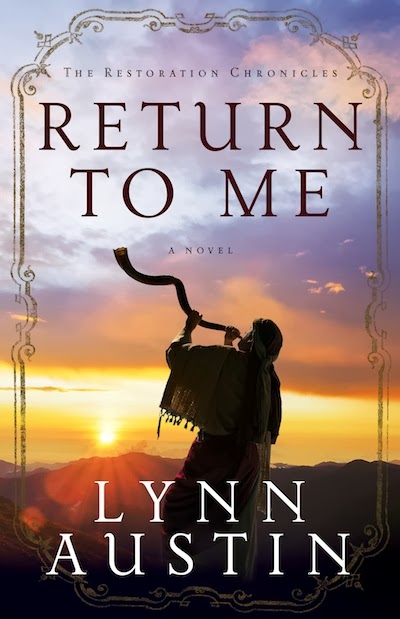
Review of Return to Me by Lynn Austin

Standard

Genre: Historical/Biblical Fiction

Series: The Restoration Chronicles Book #1

Not Recommended.

Return to Me focuses on the return to Jerusalem after the Babylonian exile, and the rebuilding of the temple. It is at this time in Jewish history that the faith is restored, liturgy is developed, and a structure is put into place in order to help the people return spiritually to God just as they have spiritually. Austin’s story demonstrates this in part, but not with accurate supplementing detail.

For instance, she portrays the Men of the Great Assembly as a functioning entity prior to the return, and also mentions the building of a fence around the Torah, but both are not formed until after the return. Rather they are introduced during the rebuilding process as the Jewish people demonstrate the renewal/re-dedication of the covenant. While there was a faithful remnant during the exile, it is very unlikely that serious devotion to Torah was being practiced (and especially not in formal yeshivas). Austin also describes other aspects of Modern Judaism that also would have been out of place at this time (e.g. the practice of kindling the sabbath lights comes from the Middle Ages).

To an extent, it may be positive that the Judaism described reflects modern rather than ancient practices. It is beneficial for the church to recognize modern Jewish culture, and in a way, brings the modern reader into the story (which is thematically very relevant for today). However, I am pursuing an M.Div. in Messianic Judaism, and had just finished a course in the history and practice of Jewish liturgy when I began reading this book. Due to my growing knowledge of Jewish history and culture, I was so distracted by the lack of historical accuracy within Austin’s presentation of postexilic Judaism that I could not relax and enjoy the story. It is too bad, because I love this kind of historical/biblical fiction, and especially love the second temple period.

Readers who are looking to understand the broad strokes of biblical history, and are less concerned with accuracy in the details, will likely enjoy this book. The characters are well-developed, the story flows well, the writing style is enjoyable, and there are moments of (I believe) divinely inspired insight. I would read another book from Lynn Austin; but this one I just could not enjoy properly.

I received a complimentary copy of this book from Bethany House.

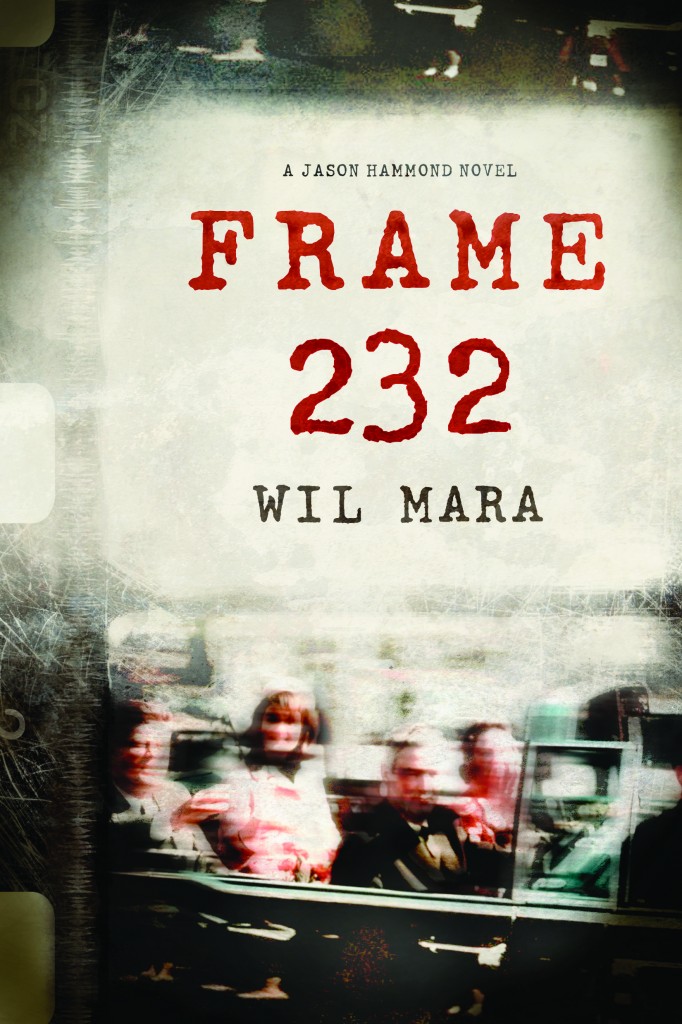
Review of Frame 232 by Wil Mara

Standard

Genre: Suspense

Series: A Jason Hammond Novel: Book One

Recommended.

This is the first book in a series of suspenseful detective novels highlighting Jason Hammond, an independent billionaire sleuth with a propensity for justice. In this story Hammond is contacted by the daughter of the infamous Babushka Lady of the JFK assassination (Sheila Baker), who needs help after discovering her late mother’s secret, and a tape of the assassination portraying a second gunman. In Hollywood-worthy form Hammond and Sheila run from the bad-guys, while picking up clues to the truth behind the crime that must be made public.

This is a completely fictitious rendition of the events surrounding the JFK assassination, but very entertaining. Wil Mara actually did a good deal of research surrounding the conspiracy theories, but writes—not in accordance to his own views (he believes Oswald was the sole shooter)—but as he imagines would be most exciting for a narrative. The result is an absorbing novel with well-developed characters, electrifyingly cunning scenes of discovery and escape, and just enough real history within the setting to ground the account as a realistic illustration.

The second book of the series, The Nevada Testament (Summer 2014), will bring a completely different mystery from the same loveable detective. I appreciate series like this that draw from familiar characters while having a story all their own.

For more information on Frame 232 check out this Q & A with the author, and the official book trailer on YouTube.

I received a complimentary copy of this book through the Tyndale Blog Network.

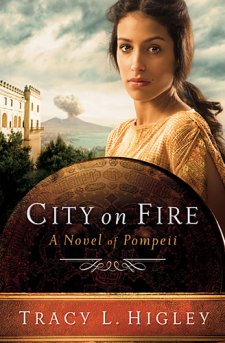
Review of City on Fire by Tracy L. Higley

Standard

Genre: Historical Romance

Recommended.

Ariella has witnessed the destruction of her beloved Jerusalem, the loss of her family, and death of her people. Now a runaway slave, she disguises herself as a male gladiator, fighting for the hope of winning the crowd and her freedom. Wealthy politician Portius Cato, is also running away in a sense—he has left Rome and the political sphere hoping to live a peaceable life in Pompeii as a winegrower, but is immediately caught up in politics as he begins to fight against social injustice and the personal affronts to his family. Cato and Ariella’s paths cross as they separately encounter a group of Christians, and each learn to surrender their individual challenges and stubbornness for a greater hope and purpose.

This is the third of Higley’s books that I have read, and while they were all good, I enjoyed this one best. I enjoyed the characters’ personalities, the suspense of knowing that Mt. Vesuvius would erupt at some point in the midst of their plans, and the historical setting of Pompeii, which has always interested me. I connected with Ariella’s strength, Cato’s sense of justice, and the Roman world, which is not far off from our own.

The author also has a very cool website with photos of her journey through Pompeii and the surrounding areas during her research, details about the writing of the book, and all sorts of other things. I love that Higley puts so much thought into portraying the historical elements of the story accurately, and enjoy following her on that adventure.

I received a complimentary copy of this book from Thomas Nelson.

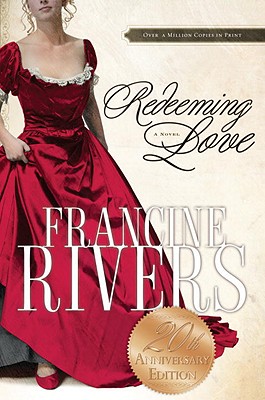
Review of Redeeming Love by Francine Rivers

Standard

Genre: Historical, Romantic Fiction

Highly Recommended!

Redeeming Love is a fictitious retelling of the biblical story of Hosea and Gomer, set in 1850s California gold country. Sarah was sold into prostitution at a very young age, and is given the “working” name Angel. Over time, her heart has hardened, and she is very good at her job. Then she meets Michael Hosea, a godly man who truly loves her and insists on marrying her. Analogizing both the Prophet Hosea, and the Father God himself, Michael demonstrates again and again that he will never stop loving, forgiving or pursuing his beloved wife.

I first read Redeeming Love immediately after becoming a Christian. At that point I had a negative view of Christian literature in general, and did not expect to enjoy this narrative; however, it instantly became my new favorite book. Reading it again today, this story still captures my heart. It is one of the few books that I could read again and again, and is still amongst my very favorite books of all time.

The depth of the characters is incredible. It does not matter that readers familiar with the biblical story may anticipate the movement of the narrative, because the story itself tugs on the heart and brings its own suspense. I do not think there is any novel that better expresses God’s deep unconditional love and investment in each one of us.

This 20th Anniversary Edition includes a Reader’s Group Guide; and while I cannot recognize if any significant changes or additions have occurred from former publications (I have long since passed forward my previous copy), it is so exciting to celebrate the anniversary of this truly life-changing book.

I received a complimentary copy of this book from WaterBrook Multnomah.

Review of Born of Persuasion by Jessica Dotta

Standard

Genre: Historical Romance/Victorian Gothic

Series: Book One of the Price of Privilege Trilogy

Recommended.

As an unmarried woman in 1838 England, recently orphaned Julia Elliston is left under the care of an anonymous guardian, who plans to carry out his ownership of her by sending her to Scotland as a servant. Desperate to control her own destiny, Julia travels to the estate of her best friend, hoping to reconnect with her childhood beau, Edward Auburn. Finding that Edward has chosen to enter the ministry, Julia (an atheist) is heartbroken and desperate for any match that will improve her social status. But as she entangles herself with the social elite, Julia begins to discover secrets about her family’s past that have serious implications for her future.

This is one of the most mysterious and suspenseful novels I have read in awhile. The strong Gothic writing, combined with the elements of Victorian England make for a chillingly grotesque, yet beautifully charming story. I felt myself caught up in the characters, the scenery, the mystery, and the wit. The romance was on the steamier side considering this is Christian fiction, but completely in line with the mood of Romantic and Gothic literature.

While it is obvious Dotta is well versed in the classics (e.g. Austen, Brontë, Poe, Dickens, Radcliffe, Shelley), she has her own unique style—and I like it! This is an excellent debut, and I cannot wait to read the rest of the trilogy! This one ended with just enough of the story wrapped up, and much more mystery to look forward to in the coming sequels.

I received a complimentary copy of this book through the Tyndale Blog Network.

Review of Rebellious Heart by Jody Hedlund

Standard

Genre: Historical Romance

Highly Recommended!

I love historical fiction, especially when it is based on the lives of real people. Rebellious Heart is inspired by the early years of John and Abigail Adams’ courting relationship in Colonial America (Massachusetts, 1763). Susanna Smith (Abigail) and Benjamin Ross (John) become unlikely friends and lovers when they work together to illegally assist an indentured servant in escaping her abusive master. The main plot of the story is fictitious (but realistic); however, many of the details and personalities of the characters closely parallel the discoveries of the author’s historical research of the Adams’ relationship and personalities.

The wealthy Susanna is wonderfully strong-willed and uniquely intelligent and witty—especially for a woman of her time. Benjamin, on the other hand, is a poor lawyer with almost nothing to his name, but with an equally feisty and intellectual spirit and an influential role within the rebellious activities against the Royal Crown. Together their challenging discussions on how to respond as Christians to the unfair treatment of the British authority bring the struggles of the Colonial Period to life, while also being relevant for similar contemporary deliberations. Moreover, the novel is a great mix of suspense, excellent dialog, steamy romance, and, of course, rich history.

I also enjoyed Hedlund’s novel, The Preacher’s Bride, based on the story of John and Elizabeth Bunyan, but this one was even more enjoyable to me. I look forward to more historical fiction from this author!

I received a complimentary copy of this book from Bethany House.

Review of Snow on the Tulips by Liz Tolsma

Standard

Genre: Historical Romantic Fiction

Recommended.

Set in a Nazi occupied part of the Netherlands toward the end of WWII, this is not only a suspenseful wartime romance, but one inspired by the true story of the author’s own relatives. The characters and high-stake narrative are so emotionally engaging I could not put it down.

Cornelia de Vries is a wartime widow who lost her husband on their wedding night at the beginning of the war. Now she hides her younger brother, Johan, in her home—doing all she can to keep his youthful spirit out of the wartime action he desires. When Dutch Resistance worker, Gerrit Laninga, comes to her door wounded and in need of help, she reluctantly takes him in. But Cornelia must come to terms with her own fears, grief, the expression of her Christian faith, and her budding romantic feelings.

This is a story of redemption, love, overcoming fear, and finding the courage to do God’s will even in the most dangerous of circumstances. Each major character portrays a unique perspective and role, which combine to create a thought-provoking and encouraging work of fiction. There is also a list of study questions in the back of the book for use in a reading group.

I received a complimentary copy of this book from Thomas Nelson.

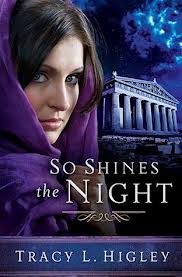
Review of So Shines the Night by Tracy L. Higley

Standard

Genre: Historical Fiction

Recommended.

So Shines the Night is a fictitious rendition of Acts 18-19, and Tracy Higley does an excellent job of making these Scriptures come to life. The central character is female teacher, Daria, who escapes Rhodes by agreeing to become a tutor to Ephesian merchant, Lucas Christopoulos. But living in Ephesus is not what she imagined. She soon discovers that Lucas is involved with some dark and mysterious people. As Daria begins to uncover the mystery of her attractive employer’s strange activities, her path merges with both the local sorcerers and the followers of the Way, including the Apostle Paul, Timothy, Priscilla, Aquila, and other familiar biblical characters.

This story rightly portrays the strong spiritual battle that was particularly visible during this period as expressed in the book of Acts, including many depictions of sorcery. While the descriptions of sorcery are carefully written so that they are “just enough” to set the scene, readers who have trouble with this subject matter should probably not read the book. Having had a background in the occult pre-salvation, I did have to take a couple breaks while reading—not because the book was overly dark, but simply because certain scenes reminded me of difficult parts of my past.

That said, I really enjoyed the historical element of book, the romance, the mystery, and the beautiful way in which Higley renders her characters. The biblical characters were not as I personally imagine them, but I found it beneficial to consider them from a contrary perspective. Also, the story was actually inspired by the Temple of Artemis (Higley has written multiple novels now that set the scene around one of the seven wonders of the ancient world), and her thorough study of history shows in her writing. I have read two of her novels now, and have enjoyed them both.

I received a complimentary copy of this book as a part of the Thomas Nelson Book Review Blogging Program through booksneeze.com.

Review of Isle of Shadows by Tracy L. Higley

Standard

Genre: Historical Fiction

Recommended!

Isle of Shadows is set in ancient Greece. Tessa of Delos serves as a hetaera (educated prostitute) to a powerful man; and when he dies, her welfare is threatened. As the sole witness to his death, she will either be held responsible for his death, or she will be sent to serve an even worse man. Desiring both physical and emotional freedom, Tessa searches for a way to escape. But as more complications arise, she finds herself with only two allies: a Jewish servant, Simeon, and a mysterious Greek man, Nikos.

This story is actually one of a few books inspired by the author’s interest in the Seven Wonders of the Ancient World. Isle of Shadows centers on the Colossus of Rhodes, a statue to the Greek god, Helios, which was destroyed in an earthquake. In fact, the book was first published as, The Shadow of Colossus.

I enjoyed both the story, and the historical element. I really emphasized with Tessa’s character: she reminded me a lot of how I felt before I encountered Jesus. The dynamic between the characters, and the swift movement of the story also made for a captivating read.

An added bonus is the author’s interactive website, which provides pictures and videos of Rhodes, Greece, so readers can better envision the location and historical context of the story. I anticipate more from this excellent storyteller.

I received a complimentary copy of this book as a part of the Thomas Nelson Book Review Blogging Program through booksneeze.com.

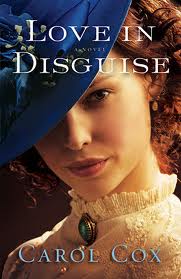
Review of Love in Disguise by Carol Cox

Standard

Genre: Historical Fiction

Recommended.

Love in Disguise is an excellent book for a lazy day of reading. It’s lighthearted with elements of mystery and romance, and is set in the charming time period of the late 1800s in a small Arizona mining community.

Unlikely heroine, Ellie Moore, becomes desperate after unexpectedly losing her job and pretends to be an older wealthier woman in order to be hired as a private detective. Although she has no undercover experience and little confidence, she creatively uses her skills in order to impress her new employer and solve the mystery of the silver thieves. But while working to undercover the mystery at hand, she also uncovers many facets of her own identity and learns to embrace her God-given identity.

This is a sweet book, with fun characters, a good amount of mystery, creative plot twists, and just enough depth. Readers who enjoy Christian fiction will find it delightful and refreshing.

I received a complimentary copy of this book from Bethany House.

Review of A Reluctant Queen: The Love Story of Esther by Joan Wolf

Standard

Genre: Romantic Historical Fiction

Not Recommended.

Joan Wolf offers a fresh perspective on the story of Esther, and she gave me a lot to think about. But this story takes too many liberties with its historical account—let alone its biblical one. There were small errors, like Esther being called Esther before the contest to become queen, rather than by her Hebrew name, Hadassah, and Haman being portrayed as an Edomite when he was actually an Agagite, and the use of the Hebrew calendar in setting Persian decrees. But there were also larger issues: changes to the royal line, like with King Ahasuerus having a brother Xerxes (most scholars believe they are one in the same), and the Prophet Obadiah attempting to stir up unrest in Palestine (while the biblical Obadiah was not prophesying at the same time as Esther’s reign and the stories do not naturally fit together).

As a story, I also felt that many places—especially in the beginning and end—were a bit rough. The first few chapters were especially awkward as the historical setting was laid through the dialog rather than the narration. I was also hoping it would have a bit of a Jewish feel, which it did not. And the end was, unfortunately, anticlimactic—certain deviations from the original story took away from the drama and suspense of the plot. Frankly, I’m surprised that some of the best moments of Esther’s story were omitted!

Overall, I’m glad I read A Reluctant Queen because it did help me to think about Esther, and myself, in a new way. But I also can’t recommend it; it’s in need of some serious editing!

I received a complimentary copy of this book as a part of the Thomas Nelson Book Review Blogging Program through booksneeze.com.

Review of the Mark of the Lion Series by Francine Rivers

Standard

Genre: Christian Historical Fiction

Recommended.

The three part Mark of the Lion series (A Voice in the Wind, An Echo in the Darkness, and As Sure As the Dawn) follow the stories of a Messianic Jewish slave girl, an aristocratic Roman family, and a German tribesman taken into slavery as a gladiator.  The setting is decadent Rome in the era of the destruction of the temple and the persecution of Jews and Christians, so THERE IS SOME GRAPHIC SEXUALITY, VIOLENCE AND PAGANISM.  I found this hard to read at first and stopped reading for nearly a year before giving it another go.  The second time I couldn’t put it down.  The pagan worship, violence and sexuality of the book, I believe, does help the story, and is written in such a way that the readers have a healthy indignation for the sin being displayed. That said, it’s not a book for everyone.

But overall, I loved the books—especially the first one.  The first two stories, especially, impacted the way I think about serving other people and the Lord, brought depth to my understanding of radical Christianity, and even gave me insight into eschatological scriptures by revealing portions of the past.

The Christian message was a bit cliché in some parts, but encouraging nonetheless.  And I was also a bit bothered by the way Rivers portrayed some of the biblical characters who were woven into the story.  It would have been better just to leave them out or to rename them, but that’s the artistic risk of giving fictitious portrayals of real-life people, and I respect her for trying.